Skip to content Skip to left sidebar Skip to right sidebar Skip to footer

Month: July 2024

Judges as Public Servants in India: A Constitutional and Legal Analysis

Introduction

The classification of judges as public servants in India is a subject of significant legal and constitutional importance. This designation is crucial for maintaining the integrity, accountability, and transparency of the judiciary, an essential pillar of democratic governance. In India, the status of judges as public servants is substantiated through various constitutional provisions, statutory enactments, and judicial interpretations. These legal frameworks collectively affirm that judges, in their capacity to administer justice, perform public duties that serve the interests of the state and society. This essay delves into the constitutional and statutory basis for this classification, supported by relevant case laws, to elucidate the role of judges as public servants within the Indian legal system.

In India, judges are considered public servants. This classification is supported by various constitutional provisions, statutory enactments, and judicial interpretations. Here’s a detailed explanation:

Constitutional Provisions

  1. Article 12: Defines ‘State’ to include the Government and Parliament of India, the Government and the Legislature of each State, and all local or other authorities within the territory of India or under the control of the Government of India. This broad definition includes the judiciary, making judges part of the ‘State’.
  2. Article 309: Empowers the appropriate legislature to regulate the recruitment and conditions of service of persons appointed to public services and posts in connection with the affairs of the Union or any State. Judges, being appointed in connection with the affairs of the Union or the States, fall under this category.

Statutory Enactments

  1. Section 21 of the Indian Penal Code (IPC), 1860: Defines ‘public servant’ and includes judges within this definition. It states that a judge is a public servant because they are appointed to discharge a public duty.
  2. The Prevention of Corruption Act, 1988: Section 2(c) specifically includes judges under the definition of public servants, thereby subjecting them to anti-corruption laws applicable to public servants.

Case Laws

  1. Nagraj v. State of Karnataka, (1993) 4 SCC 595: The Supreme Court held that judges are public servants under the IPC. This case reaffirmed that judges perform public duties and are therefore public servants.
  2. S.P. Gupta v. Union of India, 1981 Supp SCC 87: This landmark judgment on judicial independence and accountability implied that judges are public servants as they hold office and discharge public duties in connection with the affairs of the State.
  3. R.S. Nayak v. A.R. Antulay, (1984) 2 SCC 183: The Supreme Court held that the Chief Minister, a public servant, was also covered under the Prevention of Corruption Act. By analogy, this reasoning extends to judges, reinforcing that they are public servants under similar statutory provisions.

Detailed Explanation

Constitutional Context: The Constitution of India envisages a separation of powers among the Executive, Legislature, and Judiciary. However, this separation does not negate the fact that all three branches perform public duties and serve public interests. Judges, as part of the judiciary, are tasked with the administration of justice—a public function integral to the governance framework.

Statutory Context: Statutory provisions explicitly classify judges as public servants to ensure accountability and transparency. Section 21 of the IPC includes judges in the list of public servants to subject them to laws meant for maintaining integrity and preventing abuse of public office.

Judicial Interpretation: Judicial pronouncements have consistently recognized judges as public servants. This recognition is crucial for ensuring that judges remain accountable while maintaining their independence. The classification underlines the expectation that judges should uphold the highest standards of integrity and impartiality, given their role in the justice delivery system.

Conclusion

Judges in India are public servants as per the constitutional provisions, statutory enactments, and judicial interpretations. The inclusion of judges within the ambit of ‘public servant’ under various legal frameworks underscores their role in serving the public interest through the administration of justice. This classification ensures that judges are held to standards of accountability and integrity appropriate to their significant public duties.

Quasi-Judicial Bodies and Consumer Forums in India:

Introduction

In the Indian legal system, various bodies and forums are established to ensure effective adjudication and dispute resolution. Among these are quasi-judicial bodies and consumer forums, each serving distinct yet vital roles.

Quasi-Judicial Bodies are entities endowed with the authority to adjudicate disputes and enforce laws in specific areas. While they possess powers and procedures akin to those of traditional courts, they are not part of the judiciary. These bodies are designed to provide specialized adjudication, relieving the burden on regular courts and ensuring that complex, sector-specific disputes are handled by experts in those fields.

Consumer Forums, on the other hand, are specialized quasi-judicial bodies set up under the Consumer Protection Act, 2019, to address grievances between consumers and providers of goods and services. These forums aim to offer a more accessible, consumer-friendly platform for dispute resolution, ensuring that consumers have a means to seek redressal for deficiencies in products and services without the formalities of regular courts.

Understanding the differences between quasi-judicial bodies and consumer forums is crucial for navigating the legal landscape in India. This distinction highlights the specialized nature of each body, their respective legal frameworks, and the unique roles they play in maintaining justice and protecting rights within their designated domains.

Quasi-Judicial Bodies and Consumer Forums in India: Definitions and Differences

Quasi-Judicial Bodies:

Quasi-judicial bodies are entities that have powers and procedures resembling those of a court of law or judge. These bodies can adjudicate on disputes, impose penalties, and make decisions that are legally binding. However, they do not have all the powers of a full-fledged judicial body. They are often established to relieve the burden on traditional courts and provide specialized adjudication in particular areas.

Enactments and Legal Basis:

  • Various statutes provide the legal basis for quasi-judicial bodies. For example:
  • The Securities and Exchange Board of India (SEBI) under the SEBI Act, 1992.
  • The Income Tax Appellate Tribunal (ITAT) under the Income Tax Act, 1961.
  • The Central Administrative Tribunal (CAT) under the Administrative Tribunals Act, 1985.

Consumer Forums:

Consumer forums are specialized quasi-judicial bodies established to address disputes between consumers and providers of goods or services. They aim to provide an effective and accessible platform for consumers to seek redressal for grievances regarding deficiencies in goods or services.

Enactments and Legal Basis:

  • The Consumer Protection Act, 2019 establishes the framework for consumer forums in India.
  • District Consumer Disputes Redressal Commission (District Commission)
  • State Consumer Disputes Redressal Commission (State Commission)
  • National Consumer Disputes Redressal Commission (National Commission)

Differences Between Quasi-Judicial Bodies and Consumer Forums

CriteriaQuasi-Judicial BodiesConsumer Forums
DefinitionEntities with powers and procedures similar to those of a court, but limited to specific areas of law.Specialized quasi-judicial bodies for resolving consumer disputes.
Legal BasisEstablished under various statutes like SEBI Act, 1992, Income Tax Act, 1961, etc.Established under the Consumer Protection Act, 2019.
JurisdictionCovers a wide range of specific areas such as securities, income tax, administrative disputes, etc.Focuses specifically on consumer disputes related to goods and services.
FunctionAdjudicates disputes, imposes penalties, and makes binding decisions in specialized areas.Provides a platform for consumers to seek redressal for grievances against providers of goods and services.
ScopeBroad; includes areas like finance, taxation, administration, etc.Narrow; specifically targets consumer protection and disputes.
StructureCan be hierarchical or independent, with various tribunals and authorities.Structured in a three-tier system: District, State, and National Commissions.
ExamplesSEBI, ITAT, CAT, National Green Tribunal (NGT).District Consumer Disputes Redressal Commission, State Consumer Disputes Redressal Commission, National Consumer Disputes Redressal Commission.
AccessibilityMay require legal representation; more formal procedures.Designed to be consumer-friendly, with less formal procedures and accessible without legal representation.
AppealsDecisions can be appealed in higher quasi-judicial bodies or courts.Decisions can be appealed in higher consumer forums or the National Commission.

Conclusion

Both quasi-judicial bodies and consumer forums serve crucial roles in the Indian legal system by providing specialized adjudication and relief in their respective areas. Quasi-judicial bodies address a wide range of specialized disputes across various sectors, while consumer forums specifically focus on resolving disputes between consumers and providers of goods and services. Understanding their distinctions helps in navigating the legal avenues available for redressal of grievances in different contexts.

Public Servant and Civil Service: Legal Framework

Introduction

The governance and administration of a country are sustained by various categories of individuals working within the government framework. Two critical terms in this context are “public servant” and “civil service.” Although often used interchangeably, they refer to distinct aspects of government employment and service.

Public Servant:

A public servant is an individual who is employed by the government and is responsible for implementing government policies and laws. Their duties involve working in various government departments and organizations. Public servants are accountable to the public and are expected to uphold high standards of integrity and transparency.

Legal Framework:

In India, the term “public servant” is defined under Section 21 of the Indian Penal Code (IPC), 1860. This section enumerates various categories of individuals who are considered public servants, including government officers, judges, military personnel, and others holding public office.

Civil Service:

Civil service refers to the permanent professional branches of a government’s administration, excluding military and judicial branches and elected politicians. Civil servants are career officials employed on professional merit rather than appointed or elected, and their primary function is to administer government policies and programs.

Legal Framework:

The legal framework for civil services in India is primarily provided by the Constitution of India and various statutes, including the All India Services Act, 1951. Articles 308 to 323 in Part XIV of the Indian Constitution deal with services under the Union and the States, laying down provisions for the recruitment, conditions of service, and conduct of civil servants.

Differences Between Public Servant and Civil Service

CriteriaPublic ServantCivil Service
DefinitionIndividuals employed by the government in various capacities, including elected officials, judges, and others.Career officials in the permanent professional branches of government administration.
Legal FrameworkDefined under Section 21 of the Indian Penal Code, 1860.Governed by the Constitution of India (Articles 308 to 323) and the All India Services Act, 1951.
ScopeBroader; includes a variety of government employees, such as elected officials, judges, military personnel, etc.Narrower; specifically pertains to professional, permanent administrative officials.
EmploymentCan include both appointed and elected individuals.Consists of career officials appointed based on merit through competitive exams.
FunctionImplementation of government policies and laws; can vary significantly based on the role.Administration and execution of government policies and programs.
AccountabilityAccountable to the public, judiciary, and government bodies.Primarily accountable to government departments and the public, within a structured hierarchy.
ExamplesJudges, police officers, elected representatives, government employees.IAS (Indian Administrative Service), IPS (Indian Police Service), IFS (Indian Foreign Service).

Key Sections and Enactments

  1. Indian Penal Code (IPC), 1860
  • Section 21: Defines “public servant” and includes various categories of individuals serving in public offices.

2. Constitution of India

    • Articles 308 to 323: Provisions related to services under the Union and the States, dealing with recruitment, conditions of service, and conduct of civil servants.

    3. All India Services Act, 1951

      • Governs the All India Services, which include the Indian Administrative Service (IAS), Indian Police Service (IPS), and Indian Forest Service (IFS).

      Understanding these distinctions helps clarify the roles and responsibilities of individuals working within the government framework and the legal provisions that support and regulate their functions.

      Conclusion

      The terms “public servant” and “civil service” are integral to understanding the structure and functioning of government administration.

      Public Servants encompass a broad category of individuals employed by the government, including elected officials, judges, military personnel, and various other government employees. Their roles and responsibilities are defined under Section 21 of the Indian Penal Code, 1860. Public servants play a crucial role in implementing government policies and laws, ensuring accountability and transparency in governance.

      Civil Service, on the other hand, refers specifically to the permanent professional branches of government administration, excluding military and judicial branches and elected politicians. Civil servants are career officials appointed based on merit through competitive exams, governed by the Constitution of India and the All India Services Act, 1951. Their primary function is the administration and execution of government policies and programs, maintaining a structured and efficient public administration system.

      By distinguishing between these two concepts, it becomes clear how various government employees contribute to the functioning of the state, each within their defined roles and legal frameworks. This understanding underscores the importance of both public servants and civil servants in maintaining the effective operation of government and public services.

      International Organizations and Their Roles in Globalization

      Introduction

      International organizations are pivotal players in the complex landscape of globalization, acting as catalysts for cooperation, creators of norms, and facilitators of collective action on global issues. Established to address multifaceted challenges that transcend national borders, these organizations play crucial roles in promoting peace, stability, sustainable development, and economic integration on a global scale.

      Since the mid-20th century, the world has witnessed an unprecedented rise in interconnectedness, driven by advancements in technology, communications, and trade. This phenomenon, often referred to as globalization, has interconnected economies, societies, and cultures across continents, reshaping the way nations interact and collaborate.

      At the heart of this interconnected world are international organizations such as the United Nations (UN), World Trade Organization (WTO), International Monetary Fund (IMF), World Bank, World Health Organization (WHO), and International Labour Organization (ILO). Each of these organizations has a distinct mandate and sphere of influence, yet collectively they form a web of global governance aimed at managing and shaping the processes of globalization.

      The roles of these international organizations span a wide spectrum of activities, from setting global standards and norms to providing financial assistance, promoting human rights, facilitating trade negotiations, and addressing global health and environmental challenges. They operate as forums for diplomatic dialogue, platforms for consensus-building, and engines for policy coordination among nations with diverse interests and priorities.

      Through their initiatives and interventions, international organizations contribute to the promotion of inclusive growth, poverty reduction, sustainable development, and the protection of human rights worldwide. They mitigate the negative impacts of globalization, such as inequality and environmental degradation, while striving to ensure that its benefits are equitably distributed across regions and populations.

      1. United Nations (UN)

      • Overview: Established in 1945, the UN is a global organization aimed at promoting international cooperation, peace, security, human rights, and sustainable development.
      • Role in Globalization:
      • Peace and Security: Through bodies like the UN Security Council, the UN works to prevent conflicts and maintain international peace, which is essential for stable economic and social interactions globally.
      • Human Rights: The UN promotes and protects human rights globally, ensuring that globalization benefits do not come at the expense of fundamental freedoms and dignity.
      • Development Goals: Initiatives like the Sustainable Development Goals (SDGs) provide a framework for global efforts to address poverty, inequality, and environmental sustainability, guiding international development agendas.

      2. World Trade Organization (WTO)

      • Overview: Established in 1995, the WTO regulates international trade by developing and enforcing rules between nations.
      • Role in Globalization:
      • Trade Liberalization: Facilitates the reduction of trade barriers (such as tariffs and quotas), promoting free and fair trade globally, which stimulates economic growth and fosters global prosperity.
      • Dispute Resolution: Provides a platform for member countries to resolve trade disputes peacefully, ensuring smoother international economic relations and reducing trade tensions.
      • Trade Negotiations: Conducts negotiations to update and liberalize trade rules, adapting to changes in the global economy and technological advancements.

      3. International Monetary Fund (IMF)

      • Overview: Established in 1944, the IMF aims to ensure the stability of the international monetary system.
      • Role in Globalization:
      • Financial Stability: Provides monetary cooperation and financial stability advice, which are crucial for the smooth functioning of the global economy and for maintaining investor confidence.
      • Economic Surveillance: Monitors global economic trends and policies, offering guidance and technical assistance to member countries to promote sound economic policies and mitigate risks.
      • Financial Assistance: Provides loans and financial support to countries facing balance-of-payments problems or economic crises, helping them stabilize their economies and promote sustainable growth.

      4. World Bank

      • Overview: Founded in 1944, the World Bank provides financial and technical assistance to developing countries for development projects.
      • Role in Globalization:
      • Development Projects: Funds infrastructure, education, healthcare, and other critical sectors that foster economic development and poverty reduction in developing countries.
      • Knowledge Sharing: Offers research, data, and expertise to help countries implement effective development policies and strategies, promoting sustainable development practices.
      • Capacity Building: Assists countries in building institutional capacity and governance frameworks to manage economic growth effectively and inclusively.

      5. World Health Organization (WHO)

      • Overview: Established in 1948, WHO is the specialized agency of the UN responsible for international public health.
      • Role in Globalization:
      • Health Standards: Sets global health standards and guidelines, essential for managing health issues that cross borders, such as infectious diseases and health emergencies.
      • Disease Control: Coordinates international efforts to monitor, prevent, and respond to diseases, including pandemics like COVID-19, ensuring global health security and resilience.
      • Health Systems Strengthening: Supports countries in strengthening their health systems to provide universal health coverage and improve access to essential healthcare services worldwide.

      6. International Labour Organization (ILO)

      • Overview: Founded in 1919, the ILO promotes international labor rights and decent work standards.
      • Role in Globalization:
      • Labor Standards: Sets and promotes international labor standards to ensure fair wages, safe working conditions, and workers’ rights globally, protecting labor rights in a globalized economy.
      • Social Protection: Advocates for social protection measures to safeguard workers and their families from economic shocks and the negative impacts of globalization, promoting social justice.
      • Dialogue and Cooperation: Facilitates dialogue between governments, employers, and workers to address labor issues, promote decent work, and ensure fair treatment in the global economy.

      Impacts of International Organizations on Globalization

      1. Facilitating Economic Integration

      • Trade Agreements: Organizations like the WTO help negotiate and implement trade agreements, reducing barriers to international trade and promoting economic integration among nations.
      • Investment Flows: The IMF and World Bank promote financial stability, provide capital for development projects, and attract foreign direct investment, fostering economic growth and development.

      2. Promoting Development and Poverty Reduction

      • Development Aid: The World Bank and regional development banks provide funding and technical assistance to developing countries, supporting their integration into the global economy and promoting sustainable development goals.
      • Sustainable Development: The UN’s SDGs provide a comprehensive framework for global efforts to achieve sustainable development, balancing economic growth with environmental protection and social equity.

      3. Enhancing Global Governance

      • Norms and Standards: International organizations establish global norms and standards in trade, labor, health, and environment, creating a predictable and stable global framework for governance.
      • Coordination: Organizations coordinate international responses to global challenges such as climate change, pandemics, and financial crises, ensuring a collective and effective approach to addressing global issues.

      4. Addressing Inequality and Social Issues

      • Human Rights and Labor Standards: The UN and ILO advocate for human rights, labor rights, and social protection measures to ensure that globalization benefits are distributed equitably and do not exacerbate inequalities.
      • Health and Education: WHO and other organizations promote access to healthcare, education, and essential services globally, aiming to improve living standards and reduce disparities across regions.

      Conclusion

      International organizations play a crucial role in managing and shaping globalization by facilitating cooperation, establishing norms, and addressing global challenges collectively. Through their actions, these organizations promote peace, stability, human rights, economic prosperity, and sustainable development worldwide. While challenges persist, their collaborative efforts contribute to a more interconnected, equitable, and prosperous global community, striving to ensure that the benefits of globalization are shared inclusively among nations and peoples.

      This overview aims to explore the multifaceted roles and impacts of key international organizations in the context of globalization. By examining their functions, achievements, and challenges, we gain insight into how these institutions navigate the complexities of a globalized world, seeking to foster cooperation and collective action in pursuit of shared global goals.

      The Agricultural Produce (Grading and Marking) Act, 1937

      The Agricultural Produce (Grading and Marking) Act, 1937, is a cornerstone in India’s legislative framework aimed at maintaining and assuring the quality of agricultural produce. This Act lays down a comprehensive system for the standardization, grading, and marking of agricultural products, ensuring that consumers receive quality goods and farmers are rewarded for high-quality produce.

      Objectives of the Act

      The Act pursues several key objectives:

      • Standardization: Establishing clear and consistent standards for agricultural produce to ensure quality.
      • Grading: Differentiating agricultural products based on quality through a systematic grading process.
      • Marking: Implementing a marking system to indicate the grade and quality of agricultural produce.
      • Consumer Protection: Ensuring consumers receive products of defined and assured quality.
      • Market Transparency: Promoting transparent trade practices to help farmers secure better prices for quality produce.

      Key Provisions of the Act

      The Act comprises several crucial provisions designed to fulfill its objectives:

      1. Power to Make Rules (Section 3)

      Section 3 of the Act empowers the central government to frame rules regarding the grading and marking of agricultural produce. These rules encompass defining grade standards, prescribing grade designations, and setting out the standards to be adhered to.

      2. Grade Designation Marks (Section 4)

      Section 4 authorizes the use of grade designation marks, which are labels indicating the quality grade of agricultural produce. These marks are applied only to products meeting the prescribed standards, ensuring authenticity and quality.

      3. Authorities Involved (Section 5)

      Under Section 5, the Directorate of Marketing and Inspection (DMI), under the Ministry of Agriculture and Farmers’ Welfare, is tasked with implementing the Act’s provisions. The DMI oversees the grading and marking process, ensuring adherence to standards.

      4. Inspection and Certification (Section 6)

      Section 6 provides for the appointment of authorized officers who inspect agricultural produce, verify compliance with standards, and certify the produce accordingly. This ensures that only quality-assured products receive certification.

      5. Penalties for Non-Compliance (Section 7)

      Section 7 prescribes penalties for the misuse of grade designation marks or falsely representing the grade of agricultural produce. These penalties deter malpractice and ensure the integrity of the grading and marking system.

      Implementation and Impact

      The Act’s implementation is primarily facilitated through the Agmark certification, a symbol of quality assurance for agricultural produce in India. The Bureau of Indian Standards (BIS) collaborates in setting these standards, ensuring consistency and reliability.

      Market Efficiency

      The grading and marking system fosters market efficiency by providing reliable information about product quality. This transparency helps buyers make informed decisions, thereby promoting fair trade practices.

      Farmer Benefits

      Farmers benefit significantly from this system as it allows them to receive better prices for high-quality produce. By adhering to established standards, farmers can differentiate their products in the market, securing premium prices.

      Consumer Assurance

      Consumers are assured of the quality and safety of the agricultural produce they purchase. The Agmark certification serves as a guarantee of quality, instilling confidence among consumers.

      Exports

      The Act enhances the export potential of Indian agricultural products by adhering to international quality standards. This compliance boosts India’s credibility in the global market, facilitating the export of high-quality produce.

      Challenges in Implementation

      Despite its significant impact, the Act faces several challenges in its implementation:

      Awareness and Training

      There is a need for widespread awareness and training among farmers and traders regarding the standards and procedures. Effective dissemination of information is crucial for the successful adoption of the grading and marking system.

      Infrastructure

      Adequate infrastructure for grading and marking needs to be established across the country. This includes setting up grading centers and ensuring the availability of necessary equipment and facilities.

      Enforcement

      Effective enforcement mechanisms are essential to ensure compliance with the standards and prevent the misuse of the Agmark certification. Regular inspections and stringent penalties for non-compliance are necessary to maintain the integrity of the system.

      Case Laws and Judicial Interpretations

      Several case laws have shaped the interpretation and enforcement of the Agricultural Produce (Grading and Marking) Act, 1937:

      Girdhari Lal & Sons v. Balbir Nath Mathur (1972)

      In this case, the Supreme Court of India emphasized the importance of adhering to the prescribed standards for agricultural produce. The Court ruled that any deviation from these standards undermines the Act’s objective of ensuring quality and protecting consumers.

      State of Andhra Pradesh v. Smt. T. Rathna Bai (1979)

      This case highlighted the need for stringent enforcement of the Act’s provisions. The Court held that unauthorized use of grade designation marks constitutes a serious offense, warranting strict penalties to deter such practices.

      Conclusion

      The Agricultural Produce (Grading and Marking) Act, 1937, plays a pivotal role in the agricultural marketing framework of India. By ensuring the quality and reliability of agricultural produce, the Act not only protects consumers but also empowers farmers to secure better prices for their products. However, addressing the challenges of awareness, infrastructure, and enforcement is crucial for the Act’s successful implementation. Through continued efforts to enhance the grading and marking system, India can further strengthen its agricultural sector, ensuring quality produce for both domestic and international markets.

      Community and the law

      Introduction

      Community and the law are intricately connected, forming a symbiotic relationship crucial for the governance, order, and welfare of society. Laws serve as the backbone of any organized community, providing the framework within which individuals interact, resolve disputes, and uphold rights and responsibilities. This essay explores the scope, objectives, advantages, disadvantages, and challenges inherent in the interplay between community and the law.

      Laws are essential for the functioning of society, serving as guidelines that regulate behavior, ensure justice, and protect fundamental rights. Communities, comprising individuals with shared values, norms, and interests, both create and are subject to these laws. The relationship between community and the law is dynamic, influencing societal development, shaping cultural norms, and maintaining social order.

      Scope of Community and the Law

      The scope of community and the law encompasses various domains crucial for societal well-being:

      1. Civil Rights: Laws protect individual freedoms such as freedom of speech, assembly, and privacy, ensuring that community members can live without fear of discrimination or oppression.
      2. Criminal Justice: Legal frameworks define criminal offenses, prescribe punishments, and establish procedures for fair trial, thereby safeguarding public safety and order within communities.
      3. Environmental Protection: Laws regulate the use of natural resources, pollution control, and conservation efforts, aiming to sustain ecological balance and preserve environmental quality for present and future generations.
      4. Economic Regulation: Legal statutes oversee economic activities, ensuring fair trade practices, consumer protection, and the regulation of industries to foster economic stability and growth.
      5. Health and Safety: Legal provisions establish standards for public health, workplace safety, food and drug regulations, and emergency response, ensuring the well-being of community members.
      6. Education: Laws mandate educational standards, curriculum requirements, and access to education, promoting literacy, knowledge dissemination, and intellectual development within communities.
      7. Family and Personal Law: Legal frameworks govern familial relationships, marriage, divorce, inheritance, and child custody, providing structure and protection in personal matters affecting community members.

      Objectives of Community and the Law

      The primary objectives of the interaction between community and the law include:

      1. Maintaining Order and Stability: Laws establish norms and regulations that promote orderly conduct, prevent conflict, and maintain societal harmony within communities.
      2. Protecting Fundamental Rights: Legal frameworks safeguard individual rights and freedoms, ensuring equitable treatment, and protecting vulnerable groups from exploitation or discrimination.
      3. Ensuring Access to Justice: Laws provide mechanisms for dispute resolution, ensuring that grievances are addressed fairly, and justice is accessible to all community members.
      4. Promoting Social Welfare: Legal statutes aim to enhance the quality of life by providing essential services, social security benefits, and healthcare provisions to support community well-being.
      5. Facilitating Civic Participation: Laws encourage community engagement in governance, decision-making processes, and public affairs, promoting democratic values and civic responsibility.
      6. Regulating Conduct: Legal norms establish behavioral standards, deter unlawful activities, and promote ethical behavior, thereby fostering a safe and conducive environment for community life.

      Advantages of Community and the Law

      Several advantages arise from the symbiotic relationship between community and the law:

      1. Social Cohesion: Legal frameworks establish common standards and values, fostering unity, trust, and a sense of belonging within diverse communities.
      2. Protection and Security: Laws provide protection against crime, exploitation, and abuse, ensuring the safety and security of community members.
      3. Dispute Resolution: Legal mechanisms offer structured processes for resolving conflicts, reducing the likelihood of violence and promoting peaceful coexistence.
      4. Economic Stability: Regulatory frameworks promote fair competition, consumer protection, and economic growth, contributing to community prosperity and stability.
      5. Environmental Sustainability: Environmental laws preserve natural resources, mitigate pollution, and promote sustainable practices, safeguarding ecological balance and community health.
      6. Empowerment and Justice: Legal rights empower individuals to seek redress for grievances, challenge injustice, and assert their rights, promoting fairness and equality within communities.

      Disadvantages of Community and the Law

      Despite its benefits, the relationship between community and the law also presents challenges:

      1. Complexity and Accessibility: Legal systems can be complex and difficult to navigate, posing barriers to understanding and accessing legal rights and remedies for ordinary community members.
      2. Inflexibility: Laws may be slow to adapt to evolving societal values, technological advancements, or emergent challenges, leading to gaps in legal protection or relevance.
      3. Inequality in Justice: Disparities in legal representation, access to resources, and enforcement of laws can perpetuate injustice and marginalize vulnerable or disadvantaged community members.
      4. Bureaucracy and Delay: Legal processes may be bureaucratic, resulting in delays in dispute resolution or justice delivery, frustrating community members and undermining trust in the legal system.
      5. Cost and Affordability: Legal proceedings can be prohibitively expensive, limiting access to justice for individuals with limited financial means and exacerbating socio-economic inequalities.
      6. Misuse of Legal Authority: Laws can be misused or selectively enforced by authorities to suppress dissent, discriminate against certain groups, or maintain unjust power dynamics within communities.

      Challenges in the Relationship Between Community and the Law

      Several challenges persist in effectively balancing the interests of community welfare and legal governance:

      1. Access to Justice: Ensuring equitable access to legal resources, representation, and remedies remains a significant challenge, particularly for marginalized or remote communities.
      2. Legal Awareness: Increasing legal literacy and awareness among community members is essential to empower individuals to assert their rights, navigate legal systems, and hold authorities accountable.
      3. Corruption and Accountability: Addressing corruption within legal institutions and ensuring transparency, integrity, and accountability in law enforcement are critical to upholding the rule of law and fostering public trust.
      4. Cultural Sensitivity: Legal frameworks must respect and accommodate cultural diversity, traditions, and values within communities to ensure laws are inclusive, relevant, and effective.
      5. Adaptation to Change: Legal systems must be agile and responsive to societal changes, technological advancements, and emerging global challenges while upholding foundational principles of justice and fairness.
      6. Balancing Rights and Responsibilities: Striking a balance between individual rights and collective responsibilities is essential for harmonious community coexistence, requiring nuanced legal frameworks and ethical considerations.

      Conclusion

      The interplay between community and the law is fundamental to the functioning of society, shaping norms, protecting rights, and fostering social cohesion. While legal frameworks provide structure and order, communities actively participate in governance, uphold legal norms, and hold institutions accountable. Addressing challenges such as access to justice, legal literacy, and cultural sensitivity is crucial for ensuring that laws serve the best interests of all community members. By promoting fairness, transparency, and inclusivity, the relationship between community and the law can strengthen, contributing to a more just, equitable, and resilient society.

      The Indian Factories Act: An Overview

      The Factories Act, 1948, is a comprehensive piece of legislation enacted by the Indian Parliament to regulate labor conditions in factories. Its primary objective is to ensure the safety, health, and welfare of workers. This act is a cornerstone in labor law, reflecting the government’s commitment to improving labor conditions and promoting industrial safety.

      Origin of the Act

      The roots of the Factories Act in India date back to the early 20th century, influenced by the industrial revolution and the resulting need for labor regulations. The first Factories Act was enacted in 1881, primarily focusing on child labor and basic health and safety measures. Over the years, the act underwent several amendments to address emerging issues and incorporate international labor standards. The Factories Act, 1948, replaced the earlier acts and consolidated various provisions into a single comprehensive legislation.

      Scope of the Act

      The Factories Act, 1948, applies to factories employing 10 or more workers where power is used, and 20 or more workers where power is not used. The act covers a wide range of aspects, including working hours, health, safety, welfare, and the employment of young persons and women. It is designed to regulate working conditions, ensure safe working environments, and protect workers’ rights.

      Objectives of the Act

      The primary objectives of the Factories Act, 1948, are:

      1. Safety: To ensure the safety of workers by providing measures to prevent accidents and injuries.
      2. Health: To promote the health of workers by establishing standards for sanitation, ventilation, and cleanliness.
      3. Welfare: To improve the welfare of workers by providing facilities such as canteens, restrooms, and first-aid.
      4. Working Hours: To regulate working hours and ensure that workers are not subjected to excessive work hours.
      5. Employment of Young Persons and Women: To regulate the employment of young persons and women, ensuring their protection and welfare.

      Key Provisions

      1. Health (Sections 11 to 20)

      The act lays down specific provisions to ensure the health of workers:

      • Cleanliness (Section 11): Factories must maintain cleanliness and hygiene by keeping the premises clean and free from waste.
      • Ventilation and Temperature (Section 13): Adequate ventilation and temperature control measures must be provided to ensure a comfortable working environment.
      • Dust and Fume (Section 14): Effective measures must be taken to prevent the inhalation of dust and fumes.
      • Disposal of Wastes and Effluents (Section 12): Proper arrangements must be made for the disposal of industrial wastes and effluents.

      2. Safety (Sections 21 to 41)

      Safety provisions are critical to preventing accidents and ensuring worker safety:

      • Fencing of Machinery (Section 21): All dangerous machinery must be securely fenced to prevent accidents.
      • Work on or Near Machinery in Motion (Section 22): Specific safeguards must be provided for workers engaged in tasks involving moving machinery.
      • Excessive Weights (Section 34): Workers must not be required to lift, carry, or move heavy loads that may cause injury.
      • Safety Officers (Section 40B): Factories employing a specified number of workers must appoint safety officers to ensure compliance with safety standards.

      3. Welfare (Sections 42 to 50)

      The act mandates various welfare measures to improve workers’ quality of life:

      • Washing Facilities (Section 42): Adequate washing facilities must be provided and maintained in good condition.
      • Facilities for Storing and Drying Clothing (Section 43): Proper facilities must be provided for storing and drying workers’ clothing.
      • First-Aid Appliances (Section 45): First-aid appliances must be readily available and maintained.
      • Canteens (Section 46): Factories employing a certain number of workers must provide canteens for workers.

      4. Working Hours (Sections 51 to 66)

      Regulating working hours is crucial to preventing worker fatigue and ensuring productivity:

      • Weekly Hours (Section 51): No adult worker shall be required to work more than 48 hours in a week.
      • Daily Hours (Section 54): The working hours for an adult worker must not exceed 9 hours in a day.
      • Rest Intervals (Section 55): Workers must be provided with adequate rest intervals during their work shift.
      • Overtime (Section 59): Workers must be paid overtime wages for any work beyond the prescribed hours.

      5. Employment of Young Persons and Women (Sections 67 to 70)

      Special provisions are made to protect young persons and women in the workplace:

      • Prohibition of Employment of Young Children (Section 67): No child below the age of 14 years shall be employed in a factory.
      • Adolescents (Section 68): Adolescents (14 to 18 years) can only be employed if they are certified fit for work.
      • Working Hours for Women (Section 66): Women are not permitted to work between 7 PM and 6 AM to ensure their safety and welfare.

      Case Laws

      Several landmark judgments have interpreted and reinforced the provisions of the Factories Act, 1948:

      1. J.K. Industries Ltd. vs. Chief Inspector of Factories (1996): The Supreme Court held that the appointment of a safety officer is mandatory for factories employing a specified number of workers, emphasizing the importance of safety in the workplace.
      2. M.C. Mehta vs. Union of India (1987): The Supreme Court laid down guidelines for the prevention of industrial accidents, reinforcing the need for strict adherence to safety provisions.
      3. K.C.P. Ltd. vs. Inspector of Factories (1962): The Madras High Court ruled that cleanliness and maintenance of sanitary conditions are crucial for workers’ health, emphasizing the responsibility of factory management.
      4. Bandhua Mukti Morcha vs. Union of India (1984): The Supreme Court addressed issues of bonded labor and child labor in factories, highlighting the need for stringent enforcement of labor laws.

      Conclusion

      The Factories Act, 1948, is a vital legislation that plays a significant role in ensuring the safety, health, and welfare of workers in India. Its comprehensive provisions cover various aspects of labor welfare, from health and safety to working hours and employment conditions. The act has undergone several amendments to address emerging challenges and incorporate best practices in labor management. Despite its robust framework, effective implementation and strict enforcement remain crucial to achieving the act’s objectives. Landmark judgments by the judiciary have further reinforced the importance of the Factories Act, ensuring that worker protection remains a priority in India’s industrial landscape.

      The Wildlife (Protection) Act, 1972: An overview

      The Wild Life (Protection) Act, 1972: An Overview with Case Laws

      The Wild Life (Protection) Act, 1972, is a landmark legislation enacted by the Indian Parliament to safeguard the wildlife of India, ensuring ecological and environmental security. This act is pivotal in conserving various species of animals, birds, and plants, establishing protected areas, regulating hunting, and controlling trade in wildlife and its derivatives. Over the years, the act has been instrumental in addressing the challenges posed by poaching, habitat destruction, and human-wildlife conflicts.

      Objectives of the Act

      The primary objectives of the Wild Life (Protection) Act, 1972, are:

      1. Protection of Wild Animals, Birds, and Plants: To safeguard wild animals, birds, and plants to ensure India’s ecological and environmental security.
      2. Regulation and Control of Hunting: To regulate hunting and poaching activities to prevent the decline of wildlife populations.
      3. Management of Wildlife Habitats: To ensure the management and development of wildlife habitats to promote biodiversity.
      4. Conservation of Endangered Species: To conserve endangered and threatened species of flora and fauna.
      5. Regulation of Trade in Wildlife: To control trade and commerce in wildlife, animal products, and trophies, preventing illegal wildlife trade.

      Key Provisions

      1. Protected Areas

      Protected areas are crucial for the conservation of wildlife. The act provides for the establishment of different categories of protected areas:

      • Sanctuaries (Section 18): Sanctuaries are areas declared for the protection of wild animals, where activities like hunting and grazing are prohibited except under certain conditions.
      • Case Law: State of Bihar vs. Murad Ali Khan (1989): The Supreme Court upheld the conviction of individuals for hunting in a sanctuary, reinforcing the protection of wildlife sanctuaries under the Act.
      • National Parks (Section 35): National parks are areas designated for the conservation of wildlife, where more stringent protection measures are enforced compared to sanctuaries. No human activities are allowed except for tourism and scientific research.
      • Case Law: Tarun Bharat Sangh vs. Union of India (1991): The Supreme Court ordered the closure of mining activities in and around the Sariska National Park to protect the environment and wildlife.
      • Conservation Reserves and Community Reserves (Sections 36A and 36C): These are areas where the community has a stake in the management and protection of the wildlife and its habitat.
      • Case Law: Ajay Dubey vs. National Tiger Conservation Authority (2012): The Supreme Court directed states to declare buffer zones around tiger reserves to ensure better conservation efforts.

      2. Regulation of Hunting (Sections 9 to 12)

      Hunting regulations are critical to preventing the decline of wildlife populations:

      • Section 9: Prohibits hunting of any wild animal specified in Schedules I, II, III, and IV of the Act.
      • Case Law: Akhil Bharatiya Jeev Raksha Bishnoi Sabha vs. State of Rajasthan (2017): The Rajasthan High Court upheld the strict prohibition on hunting, emphasizing the need to protect endangered species.
      • Section 11: Allows hunting of wild animals under special circumstances such as self-defense or protection of human life or property.
      • Case Law: M.K. Ranjitsinh vs. Union of India (2010): The Supreme Court laid down guidelines for the killing of dangerous animals, ensuring it is done as a last resort.
      • Section 12: Permits hunting for education, scientific research, and scientific management.
      • Case Law: Centre for Environmental Law WWF vs. Union of India (2013): The Supreme Court highlighted the importance of scientific management in wildlife conservation.

      3. Protection of Specified Plants (Sections 17A to 17H)

      These sections prohibit picking, uprooting, damaging, destroying, acquiring, or possessing specified plants from the protected areas, ensuring their conservation.

      4. Trade and Commerce in Wild Animals, Animal Articles, and Trophies (Sections 39 to 49)

      Regulating trade in wildlife is essential to curb illegal activities:

      • Section 39: States that wild animals specified in Schedules I and II, and their parts and products, are government property.
      • Case Law: S. K. Mondal vs. State of West Bengal (2011): The Calcutta High Court ruled that wildlife and its derivatives belong to the state, reinforcing the government’s role in controlling wildlife trade.
      • Section 43: Regulates the transfer of captive animals and prohibits trade in them.
      • Sections 44 to 49: Control and regulate trade and commerce in wildlife and their derivatives, ensuring that only licensed dealers operate.
      • Case Law: Supreme Court Legal Aid Committee vs. Union of India (1995): The Supreme Court banned the trade in ivory and ivory products, aiming to curb poaching and illegal trade.

      5. Penalties and Offences (Sections 51 to 58)

      The act specifies stringent penalties for violations to deter wildlife crimes:

      • Section 51: Specifies the penalties for contravening any provision of the act, including imprisonment up to seven years and fines.
      • Case Law: Sanjay Kumar vs. State of Bihar (2016): The Supreme Court imposed stringent penalties for wildlife crimes, emphasizing the importance of strict enforcement.
      • Section 52: Details the punishment for abetment of offenses under the act.
      • Section 54: Provides for the forfeiture of property derived from illegal wildlife trade.
      • Case Law: State of Maharashtra vs. Gajanan Krishna Bapat (1995): The Bombay High Court upheld the forfeiture of property acquired through illegal wildlife trade.

      6. Authorities and Officers

      The act designates specific authorities for its implementation:

      • Director of Wildlife Preservation (Section 3): The central authority responsible for the implementation of the act.
      • Chief Wildlife Warden (Section 4): State-level authority responsible for implementing the provisions of the act in the state.
      • Wildlife Wardens (Section 4): Officers appointed to assist the Chief Wildlife Warden.

      Schedules

      The act includes six schedules that provide varying degrees of protection to different species:

      • Schedule I: Absolute protection to endangered species; offenses related to these species attract the highest penalties.
      • Case Law: State of Karnataka vs. Dr. Praveen Bhai Thogadia (2004): The Supreme Court upheld the protection of species listed in Schedule I, emphasizing severe penalties for violations.
      • Schedule II: High protection but lower than Schedule I; includes species that are not critically endangered but need protection.
      • Case Law: State of Uttar Pradesh vs. Lalit Tandon (2003): The Allahabad High Court reinforced the protection measures for species under Schedule II.
      • Schedule III and IV: Species that are protected but the penalties for offenses are lower.
      • Schedule V: Animals classified as vermin, which can be hunted.
      • Schedule VI: Specifies plants that are protected under the act.

      Amendments and Updates

      The act has been amended several times to strengthen wildlife conservation measures:

      • 2002 Amendment: Introduced stricter penalties and created the National Board for Wildlife for overall policy framework and coordination.
      • 2006 Amendment: Established the National Tiger Conservation Authority and provided for the constitution of Tiger and Other Endangered Species Crime Control Bureau.
      • Case Law: Prerna Singh Bindra vs. Union of India (2011): The Supreme Court upheld the creation of the National Tiger Conservation Authority, emphasizing its role in tiger conservation.
      • 2013 Amendment: Focused on stronger measures to combat poaching and illegal trade of wildlife.

      Implementation and Challenges

      Implementation: The act is implemented by central and state governments through designated wildlife authorities and officers. Various agencies, including forest departments, wildlife conservation organizations, and law enforcement, work together to enforce the provisions of the act.

      Challenges:

      • Poaching and Illegal Trade: Despite stringent laws, poaching and illegal trade in wildlife continue to pose significant challenges.
      • Case Law: Sansar Chand vs. State of Rajasthan (2010): The Supreme Court highlighted the ongoing issue of poaching and the need for stricter enforcement of wildlife protection laws.
      • Human-Wildlife Conflict: Increasing human encroachment into wildlife habitats has led to conflicts, resulting in damage to property, livestock, and sometimes loss of human lives.
      • Case Law: T.N. Godavarman Thirumulpad vs. Union of India (1997): The Supreme Court addressed the issue of human-wildlife conflict, stressing the need for creating buffer zones and minimizing human intrusion into wildlife habitats.
      • Habitat Destruction: Deforestation, industrialization, and urbanization are leading to habitat loss, threatening wildlife conservation efforts.
      • Case Law: Orissa Mining Corporation vs. Ministry of Environment & Forest (2013): The Supreme Court halted mining activities in a wildlife-rich area, emphasizing the importance of habitat protection.
      • Insufficient Resources: Lack of adequate resources and trained personnel hampers effective implementation and enforcement of the act.
      • Case Law: Nandini Sundar vs. State of Chhattisgarh (2011): The Supreme Court underscored the need for better resource allocation and training for wildlife protection personnel.

      Conclusion

      The Wild Life (Protection) Act, 1972, is a critical legislative framework aimed

      at conserving India’s rich biodiversity. By establishing protected areas, regulating hunting, and controlling trade in wildlife, the act provides comprehensive measures for wildlife protection. However, effective implementation, enhanced resources, and addressing emerging challenges are crucial to achieving the objectives of the act and ensuring sustainable conservation efforts. The judiciary has played a significant role in interpreting and enforcing the provisions of the act, ensuring that wildlife conservation remains a priority.

      Doctrine of Legitimate Expectation: A Principle of Fairness in Administrative Law

      The Doctrine of Legitimate Expectation is a pivotal principle in administrative law designed to protect individuals’ expectations that arise from promises or established practices by public authorities. Although not explicitly mentioned in the Indian Constitution, this doctrine is grounded in the broader principles of the rule of law and good governance, ensuring fairness and transparency in administrative actions.

      The Doctrine of Legitimate Expectation is sometimes referred to as the principle of “Procedural Fairness” in administrative law. This is because it primarily focuses on ensuring that public authorities adhere to fair procedures when dealing with individuals who have developed legitimate expectations based on the authorities’ promises or established practices. It upholds the values of consistency, transparency, and fairness in administrative actions.

      Key Aspects of the Doctrine of Legitimate Expectation

      1. Basis of Expectation: Legitimate expectations can stem from:
      • Explicit Promises: Clear and unambiguous promises or assurances made by public authorities.
      • Established Practices: Consistent practices or conduct by public authorities that lead individuals to believe that a particular procedure or benefit will continue.
      1. Protection Against Arbitrariness: The doctrine shields individuals from arbitrary changes in policy or practice by public authorities. When an expectation is considered legitimate, authorities are required to provide a fair hearing before altering or withdrawing the benefit or practice.
      2. Fairness and Transparency: This doctrine mandates that public authorities act fairly and transparently, particularly when individuals have relied on their promises or established practices.

      Application in Indian Judicial Decisions

      Key Cases

      1. Navjyoti Cooperative Group Housing Society v. Union of India (1992): The Supreme Court of India emphasized that the concept of legitimate expectation pertains to the need for administrative practices and policies to be consistent and fair. The court highlighted that the government should adhere to its policies unless there is a substantial reason for change.
      2. Union of India v. Hindustan Development Corporation (1993): The Supreme Court elaborated on the doctrine, stating that legitimate expectation grants an individual the right to be heard before a decision adverse to their interest is made. The court also clarified that this doctrine does not confer a substantive right but ensures procedural fairness.
      3. Council of Civil Service Unions v. Minister for the Civil Service (1985) (a UK case): This case has significantly influenced Indian jurisprudence. The court held that a legitimate expectation arises when a public body’s decision affects an individual’s rights or interests based on the public body’s promises or regular practice.
      4. Punjab Communications Ltd. v. Union of India (1999): The Supreme Court reiterated that the doctrine is rooted in fairness and the rule of law. The court stated that if a public authority deviates from a promise or established practice, it must act fairly and provide an opportunity for the affected party to present their case.
      5. Madras City Wine Merchants’ Association v. State of Tamil Nadu (1994): The court ruled that the government must respect the legitimate expectations of traders based on long-established practices unless there is a valid reason for change, in which case due process must be followed.

      Limitations and Conditions

      1. No Enforceable Right: Legitimate expectation does not create a substantive right. It ensures a right to be heard and procedural fairness before expectations are altered.
      2. Public Interest: If overriding public interest necessitates a change in policy or practice, the legitimate expectation may not hold. However, the authority must still follow fair procedures.
      3. Reasonableness: The expectation must be reasonable and lawful. If the promise or practice is against the law or public policy, it cannot create a legitimate expectation.
      4. Discretionary Nature: Public authorities have the discretion to change policies and practices. The doctrine ensures that such changes are not arbitrary and that individuals affected by the changes are given a fair hearing.

      Conclusion

      The Doctrine of Legitimate Expectation under the Indian Constitution plays a crucial role in administrative law by ensuring that public authorities act fairly, transparently, and consistently. It provides a procedural safeguard for individuals against arbitrary administrative actions, thereby upholding the principles of natural justice and the rule of law. By protecting individuals’ expectations based on promises or established practices, this doctrine reinforces the trust between citizens and public authorities, contributing to a more just and equitable administrative system.

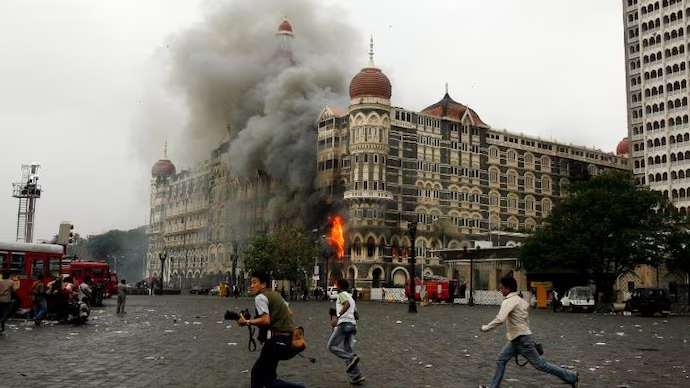
      Terrorist act under BNS

      Chapter VI: OF OFFENCES AFFECTING THE HUMAN BODY U/S.113. (1) Whoever commits any act with the intent to threaten or likely to threaten the unity, integrity, sovereignty, security, or economic security of India, or with the intent to strike terror or likely to strike terror in the people or any section of the people in India or any foreign country, by means such as:

      (a) Using bombs, dynamite, or other explosive substances, inflammable substances, firearms, or other lethal weapons, or poisonous, noxious gases, chemicals, or any hazardous substances (whether biological, radioactive, nuclear, or otherwise) or any other means of whatever nature to cause or likely to cause:

      (i) Death or injury to any person or persons;
      (ii) Loss, damage, or destruction of property;
      (iii) Disruption of any supplies or services essential to the life of the community in India or any foreign country;
      (iv) Damage to the monetary stability of India through production, smuggling, or circulation of counterfeit Indian paper currency, coins, or any other material;
      (v) Damage or destruction of any property in India or abroad used or intended for defense purposes or in connection with other purposes of the Government of India, any State Government, or their agencies;

      (b) Overawes by means of criminal force or the show of criminal force, or attempts to do so, or causes the death of any public functionary or attempts to cause the death of any public functionary;

      (c) Detains, kidnaps, or abducts any person and threatens to kill or injure such person or commits any act to compel the Government of India, any State Government, or the government of a foreign country, an international or inter-governmental organization, or any other person to do or abstain from doing any act, commits a terrorist act.

      Explanation.—For the purposes of this sub-section:

      (a) “Public functionary” means the constitutional authorities or any other functionary notified in the Official Gazette by the Central Government as a public functionary;

      (b) “Counterfeit Indian currency” means the counterfeit currency as may be declared after examination by an authorized or notified forensic authority that such currency imitates or compromises the key security features of Indian currency.

      (2) Whoever commits a terrorist act shall:

      (a) If such an offence results in the death of any person, be punished with death or imprisonment for life, and shall also be liable to a fine;
      (b) In any other case, be punished with imprisonment for a term not less than five years but which may extend to imprisonment for life, and shall also be liable to a fine.

      (3) Whoever conspires or attempts to commit, or advocates, abets, advises, or incites, directly or knowingly facilitates the commission of a terrorist act or any act preparatory to the commission of a terrorist act, shall be punished with imprisonment for a term not less than five years but which may extend to imprisonment for life, and shall also be liable to a fine.

      (4) Whoever organizes or causes to be organized any camp or camps for imparting training in terrorist acts, or recruits or causes to be recruited any person or persons for the commission of a terrorist act, shall be punished with imprisonment for a term not less than five years but which may extend to imprisonment for life, and shall also be liable to a fine.

      (5) Any person who is a member of an organization involved in terrorist acts shall be punished with imprisonment for a term which may extend to imprisonment for life, and shall also be liable to a fine.

      (6) Whoever voluntarily harbors or conceals, or attempts to harbor or conceal any person knowing that such person has committed a terrorist act shall be punished with imprisonment for a term not less than three years but which may extend to imprisonment for life, and shall also be liable to a fine:

      Provided that this sub-section shall not apply to any case in which the harbor or concealment is by the spouse of the offender.

      (7) Whoever knowingly possesses any property derived or obtained from the commission of any terrorist act or acquired through the commission of any terrorist act shall be punished with imprisonment for a term which may extend to imprisonment for life, and shall also be liable to a fine.

      **Explanation.—For the removal of doubts, it is hereby declared that an officer not below the rank of Superintendent of Police shall decide whether to register the case under this section or under the Unlawful Activities (Prevention) Act, 1967.

      Description:

      For the first time, the offence of terrorism has been introduced in the general law of the land, and the act of terrorism has been clearly defined. Section 113 has been drafted on the lines of the Unlawful Activities (Prevention) Act (UAPA). It provides for punishment for the commission, attempt, abetment, conspiracy, membership of any terrorist organization, recruitment or organization of camps for training, harboring or concealing any person who has committed a terrorist act, and possession of proceeds of crime or property obtained or derived from the commission of a terrorist act. The penalties include the option of death or life imprisonment without parole.

      Counterfeiting Indian currency has also been covered under this section as a terrorist act, similar to the UAPA. Destruction of any property in India or abroad, disruption of essential services, and damage to the monetary stability of India are also addressed under this section.

      The provision recognizes the term “public functionary,” encompassing constitutional authorities and other functionaries notified by the Central Government. Criminal force or attempts to cause the death of a public functionary falls under the purview of terrorism. Destruction of public facilities or private property is now criminalized as a terrorist act.

      This section addresses terrorism beyond international borders. It includes acts that result in damage by way of the destruction of critical infrastructure, recognizing the global threat of international terrorism. Special attention is given to vulnerabilities posed by cyber-attacks on critical infrastructures, thereby encompassing a broad range of modern terrorist activities.

      Conclusion:

      This comprehensive legal provision aims to strengthen national security by ensuring that all forms of terrorism are addressed with the utmost seriousness. It provides law enforcement agencies with the necessary legal tools to prevent and combat terrorism effectively, thereby safeguarding the unity, integrity, and security of the nation. The explicit inclusion of modern threats, such as cyber-attacks, underscores the forward-looking approach of the legislation in adapting to contemporary challenges.

      Overall, Section 113 serves as a robust framework for deterring and prosecuting terrorist activities, reinforcing India’s commitment to maintaining internal and external security in an increasingly complex global landscape.