The Indian Constitution establishes a distinctive federal system for the country. It is a large piece of law that lays forth the Directive Principles of State Policy that the legislature should keep in mind while enacting legislation in addition to giving shape to the dreams of freedom fighters by emphasizing fundamental rights. The division of topics on which the Union and State governments may pass laws is outlined in detail in Part XI of the Constitution, which deals with legislative relations. This section of the article discusses the various sections of the constitution’s environmental provisions.
Preamble to the Indian Constitution
The Indian Constitution’s Preamble, which begins with “We the People,” lays forth the Constitution’s purposes and objectives. A Sovereign Socialist Secular Democratic Republic is proclaimed for India. It has been declared to be a key to the constitution’s creators’ minds.i Even though the 42nd Amendment later added the words “Secular and Socialist” to the Constitution, the document already had a secular and socialist foundation. The Constitution has several articles that address the socialist and secular structures of the country, with Part IV placing emphasis on the socialist mode of government and Part III defining the secular structure of the nation.
When Part IV of the Indian Constitution is read in connection with the word socialist, it is clear that the Constitution adopted a welfare state with socialism as its primary model. Social welfare is impossible if individuals are made to live in filthy conditions that put their health and life in danger. The phrase “Democratic Republic” emphasizes the idea that the people have a right to participate in the political process and that the government should work for their welfare. This suggests that the government will work to ensure that there is a clean environment that is fit for human habitation in addition to other things.
Right to life and Environment Protection
The constitutional right to life is protected under Article 21. According to this, no one’s right to life or personal liberty may be taken away from them until legal procedures are followed. According to one interpretation, the phrase “except in accordance with procedures established by law” means that this rule is subject to exception and is governed by legislation, which differs from instance to case.
In addition to the basic essentials of life, such as food, shelter, clean water, and clothing, the right to life also encompasses the right to live in dignity. The right to life includes the ability to live in a decent and safe environment free from danger to one’s life. The surroundings must be free of illnesses.
According to the ruling in Charan Lal Sahu v. Union of India, the state has a responsibility to take reasonable and decisive action to uphold and defend constitutional rights protected by Articles 21, 48-A, and 51-A(g).
Right To Equality and Environmental Protection
Article 14 of the Constitution guarantees everyone equal protection under the law as well as equality before the law. The state cannot violate article 14 since this fundamental right implicitly imposes an obligation on it to act fairly while pursuing environmental protection measures. The judiciary has played a stringent role in prohibiting the arbitrary sanction in cases where state authorities have used their arbitrary powers. The fundamental right to equality of all persons is violated when discretionary powers are used without considering the needs of the general public.
Freedom of Speech and Expression and Environment
Article 19(1)(a) of Part III of the Constitution specifically mentions the right to free speech and expression as a basic right. As in the case of Rural Litigation and Entitlement Kendra, Dehradun v. State of Uttar Pradesh, where people complained about the violation of their right to a clean and safe environment and a right to livelihood, there have been numerous instances where people have approached the court through speech and by expressing themselves in writing.In India, the media has been playing a crucial role in moulding the perception of people in issues relating to the environment. Thus, Article 19(1)(a) is interpreted to include the freedom of the press as well.
Freedom of Trade and Commerce and Environmental Protection
According to Article 19 (1)(g) of the Constitution, every Indian citizen has a basic right to practice any profession, business, trade, or commerce at any location in Indian territory. However, as this is not a universal right, there are certain fair limitations. This basic right to avoid environmental hazards is subject to a reasonable restriction as set forth in Article 19(6) of the Constitution. The purpose is to avoid the ecological imbalance and degradation of the atmosphere in the name of carrying on a trade, business, occupation or carrying on any profession. Thus, in the name of business or profession, one cannot cause harm to the environment.
Fundamental Duties of Indian Constitution:
Part IV A of the Constitution of India inserted by Constitution (Forty-second Amendment) Act, 1976 imposes duties upon very citizen of India. Article 51A casts eleven duties upon the citizens of India.iv Article 51A(g) casts the following duty upon the citizens of India To protect and improve the natural environment including forests, lakes, rivers and wild life, and to have compassion for living creatures.
Directive Principles of State Policy
Guidelines for State Policy are outlined in Part IV of the Indian Constitution. They specify the nation’s socioeconomic objectives. Although Directive Principles are not subject to the law, Article 37 declares them to be essential to the nation’s government. There was no explicit clause in Part IV that dealt only with the environment prior to the 42nd Amendment. The provisions entrenched in Articles 38, 47, and 50 read with Article 37, however, can be used to infer the Indian Constitution’s intention to safeguard the environment.
Legislative powers and matters of environmental protection
The Indian Constitution recognizes three different lists: concurrent, state, and union. At the state and union levels, the government’s authority is divided. State government handles matters of state list, while central government handles matters of union list. As a result, only the Parliament has the authority to pass legislation regarding list I, which is the list of topics of union. The state list, or list II, deals with issues including public health, drainage, the availability of clean water, and sanitation. It deals with issues pertaining to military, nuclear power, oil field regulation, air traffic, etc.
If a state law is passed after a federal law, in order for it to take effect, it must first receive presidential assent in accordance with Article 254. Parliament has the authority to legislate state matters as well in times of national emergency. To enact laws that can address environmental issues, these legislative authorities must be divided. The state has undertaken several projects to improve the environment, yet they could represent a major threat to the ecology. Development and the conservation of the environment are in conflict in these situations, and the Environment Impact Assessment (EIA) is used to address these issues. Additionally, the planning commission has acknowledged this.
International Environmental Agreements
India has been a signatory to a myriad of international agreements pertaining to environmental preservation. Because it was agreed upon in the Stockholm Declaration in 1972 that there is only one environment on Earth. India is required to translate these provisions and implement them in the nation as a signatory to such international agreements. This is expressly mentioned in Article 51(c) of the Indian Constitution, which states that the state will promote adherence to treaty obligations and international law.
Article 253 of the Constitution, which gives the Parliament of our nation the power to pass laws that can be applied to the entire or any territory of the country for implementing any agreement or convention signed with the other country or countries, is another crucial provision that deals with protecting the environment.Parliament may also pass laws to carry out decisions made at international conferences. Any provision made in connection with environmental protection in line with Article 253 read with Articles 13 and 14 cannot be contested in court on the grounds that the legislator lacked the authority to make the provision.
With the use of this power, it is pertinent to know that Parliament has enacted Air ( Prevention and Control of Pollution) Act 1981, and Environment Protection Act, 1986. It has been clearly stated in the Preamble of these acts that the purpose of their enactment was to implement the decisions taken at the United Nations Conference on the Human Environment, held at Stockholm in the year 1972.
In Vellore Citizens’ Welfare Forum v. Union of India AIR 1996 SC 2715 the supreme court ruled that, as long as they are not in conflict with them, municipal rules must take into account international customary law. It is a recognized legal theory. The domestic courts of law so regarded adherence to international law as mandatory.
Role of the Supreme Court in environmental protection
In lieu of the wide range of cases dealt by supreme court with regard to environmental protection, a plethora of judgements have been passed which have laid down various principles to be taken care of before indulging in any activity which might pose a threat to the environment. Also, different aspects of the environment have been highlighted by giving them immense importance like natural resources. Air and water have been given the status of the gift of nature and inalienable part of life.
Polluter Pays Principle
That “if you make a mess, it becomes your duty to clean it up” is the fundamental idea behind this tenet. The polluter pays principle places more focus on the remedial strategy to restore the ecological harm produced by any individual or group of individuals than it does on the ‘fault’. In the OECD Guiding Principles for International Economic Aspects of Environmental Policies, this idea was originally mentioned in 1972.Additionally, same idea was utilized in the Vellore Citizens Welfare Forum v. Union of India case. In M.C Mehta v. Union of India and Ors( Calcutta Tanneries Case), the polluter pays principle was applied where industries were directed to be relocated and these industries were ordered to pay 25% of the cost of the land.
Precautionary Principle
The precautionary principle is outlined in Rio Declaration Principle 15. In light of this. Applying the precautionary principle is crucial for environmental protection. According to this principle, the absence of complete scientific certainty cannot be used as an excuse for failing to issue cost-effective procedures where there is a likelihood of significant harm or irreparable environmental damage.Another judicial decision based on the precautionary principle was made in M.C. Mehta v. Union, often known as the Taj Mahal Case. A public interest lawsuit was filed in this instance, stating that environmental contamination is to blame for the Taj Mahal’s decline. Court referred the case to the expert committee to seek technical advice on the matter. On the basis of the report of the committee. This monument is a monument of international repute. The industries located in the Taj Trapezium Zone(TTZ) were using coke/coal as the industrial fuel, thus emitting effluents.
The doctrine of Public trust
This doctrine rests on the principle that certain resources which are required for fulfilling the basic amenities of life like air, water etc hold great importance to the people at large that it would be completely unjustified to make these resources available to private ownership. Since these resources are the gift of nature that is why they should be made freely available to every individual of the society irrespective of the status in life. The doctrine obliges the government to protect resources for public use rather than being exploited by a private person for making economic gains.
Thus, commercial use of natural resources is completely prohibited under this doctrine. For the effective and optimum utilization of resources, this doctrine mandates an affirmative action of the state authorities. Also, citizens are empowered to question the authorities if resource management is ineffective.
Case Laws:
M.C. Mehta v. Union of India AIR 1997 SC 734 where a petition was filed for preventing the degradation of the Taj Mahal due to pollution caused by coal using industries via Trapezium, the Apex Court issued directions to 292 industries located in Agra to change over within a time schedule to Natural Gas as industrial fuel or stop functioning with coal/coke and to apply for relocation or otherwise stop functioning w.e.f. 30-04-1997 on account of violation of Articles 21, 48A, 51A and 47 of the Constitution. M.C. Mehta v. Kamal Nath AIR 2000 SC 1997 it was contended by the petitioner that if a person disturbs the ecological balance and tinkers with the natural conditions of rivers, forests, air and water, which are the gifts of nature, he will be violating the fundamental right guaranteed under Article 21 of the Constitution. Supreme Court accepted the contention of the petitioner and held that any disturbance of basic environment elements namely air, water, soil which are necessary for “life” would be hazardous to “life” within the meaning of Article 21 of the constitution. The court after holding it to be a violation of article 21 proceeded to observe that in these cases polluter pays principle and principle of Public Trust Doctrine applies
Subash Kumar v. State of Bihar AIR 1991 SC 420 it was held that right to live is a fundamental right under Article 21 of the constitution and it includes the right to enjoyment of pollution free water and air for full enjoyment of life. If anything endangers or impairs that quality of life in derogation of laws, a citizen has a right to have recourse to Article 32 of the constitution for removing the pollution of water or air which may be detrimental to the quality of life.
Ratlam Municipality v. Vardhi Chand AIR 1980 SC 1622 supreme court ordered the closure of limestone quarries in Dehra Dun-Mussooorie Area. It realised that the closure of limestone quarries would cause financial hardships but the court observed that it is the price that has to be paid for protecting and safeguarding the right of the people to live in a healthy environment with minimal disturbance of ecological balance, and without avoidable hazard to them and to their cattle, homes and agricultural land and undue affection of air, water and environment.
Conclusion:
The term “environment” was not specifically mentioned in the Constitution in the past, and there were no provisions in place to address environmental hazards and control human behavior that was significantly contributing to the degradation of the environment while purporting to be exercising fundamental rights. The supreme law of the land is the constitution. Therefore, including clauses that particularly address environmental issues might prove advantageous for the environment.
The concept of Strict Liability in torts is also referred as “No-Fault Liability”, which can very explain this concept in an obvious manner- “that liability would exist irrespective of any fault”. There exist certain activities which are inherently so dangerous in nature that merely carrying them on poses a duty on the person who does so, to compensate for any damage irrespective of any carelessness on their part. The rationale behind imposing such liability is the foreseeable risk involved in such activities. This principle was first applied by the House of Lord in the case of Rylands v. Fletcher.
Meaning of Absolute Liability
Following the infamous “oleum gas leak case,” M.C. Mehta v. Union of India, the idea of absolute culpability was developed in India. One of the landmark cases in Indian law is this one. Strict liability is applied in the M.C. Mehta case, but no exceptions are provided and the defendant is held entirely responsible for his actions.
According to the ruling in the Ryland v. Fletcher case, the defendant will not be permitted to raise a defense if he or she was at fault.There was an urgent need to establish a strict responsibility rule with no exceptions accessible to the defendant in the wake of the Bhopal gas leak case since many people perished and continue to suffer from some of the fatal diseases down the generations.
Difference:
Sr. No.
Strict Liability
Absolute Liability
1
In Strict Liability, the point of contention is the ‘non-natural’ use of one’s land in using or handling an object/thing.
In Absolute Liability, the presence of hazardous or inherently dangerous substances or objects is necessary.
2
The escape of the dangerous thing is imperative, and it cannot be applied to damage caused inside the premises of the defendant, as seen in the case of Read Vs. Lyons and Co. here in above.
In Absolute Liability, the escape of such dangerous things is not necessary, but the mere use of a hazardous substance makes the party subject to this rule. It is applicable to damage caused to people inside as well as outside the defendant’s premises.
3
The Strict Liability rule has some defences and exceptions that can be used by the defendant. These include: Act of GodConsent of PlaintiffAct of Third PartyAn act done under Statutory Authority.The defendants, therefore, have a chance to be relieved of the liability by proving that their act falls in one of the abovementioned exceptions to Strict Liability.
3. In Absolute Liability, the defendant does not have any scope for defence or exceptions but is held completely liable for the damages caused by them in all circumstances.
4
The rule solely applies to the non-natural use of land.
This rule applies to the natural or the non-natural use of any land.
5
Compensatory damages are paid to the plaintiff, depending on the nature and quantum of the damages caused to them.
The damages paid to the victims are exemplary in nature and are much greater as the defendants are liable for people’s lives and environmental conditions in such cases.
6
The Strict Liability concept was independently formed in England in 1868.
The Absolute Liability rule was formulated in India after the courts realized the shortcomings of Strict Liabilities. Absolute Liability was inherently Strict Liability – the exceptions.
In the stratosphere of the earth, there is a layer of ozone made up of three oxygen atoms per molecule. It is believed to screen against the sun’s harmful UV rays and regulate the stratosphere’s temperature structure. At lower altitudes, ozone also contributes to global warming and irritates the respiratory system while hurting plant development. Since 1960, there have been significant losses in the ozone layer over Antarctica during the spring in the Southern Hemisphere, and more recently, a hole has developed in the ozone layer over the Arctic.
Human activity-related emissions of some inert gases, mainly CFCs, are to blame for the ozone layer’s thinning. These gases break down when they are exposed to UV rays in the stratosphere, releasing free chlorine from CFCs and bromine from halons, which fragments the ozone molecule and thins the ozone layer. The 1985 Vienna Convention for the Protection of Ozone Layer and the 1987 Montreal Protocol on Substances that Deplete Ozone Layer make up the complicated framework that addresses protecting the ozone layer from these harmful substances.
Vienna Convention for The Protection Of Ozone Layer, 1987
Under the supervision of UNEP, the Vienna Convention was negotiated over a five-year period. The 22nd of March 1985 saw its adoption, and the 22nd of September 1988 saw its entry into effect. 185 States have joined as parties to it as of this writing. All States are welcome to participate in the first treaty to address the issue of the world’s atmosphere. There are 2 Annexures and 21 Articles in the Convention. It created a framework for adopting policies “to protect human health and the environment from adverse effects resulting from or likely to result from human activities which modify or are likely to modify the Ozone layer.”
What is the purpose of the Vienna Convention?
The purpose of the Vienna Convention is to protect the ozone layer from depletion. 28 countries originally signed the convention on 22nd March 1985. On 16th September 2009, Vienna Convention along with Montreal Protocol was universally ratified and thus became the first treaties in the history of the United Nations to achieve universal ratification.
Important Articles of Vienna Convention for The Protection Of Ozone Layer
The ozone layer is described in Article 1(1) of the Convention as the layer of atmosphere ozone above the planetary boundary layer.Article 2(1) of the Convention requires parties to take four categories of “appropriate measures” in accordance with the resources at their disposal, their capabilities, and the basis of pertinent scientific and technological considerations. It does not, however, prescribe any targets or deadlines for activities.
Co-operation on systematic observation;
Research and information exchange;
Adoption of appropriate legislative or administrative measures and co-operation on policies to control, limit, reduce or prevent activities that are likely to have adverse effects resulting from modifications to ozone layer;
Co-operations in the form of measures, procedures, standards to implement the Convention as well as with competent international bodies.
Article 2 further provides that parties are free to adopt additional domestic measures in accordance with international law [in the form of enactments, rules and regulations, policies] and maintain in force, compatible measures already taken.
The forms of study and systematic observations that must be conducted either directly or through international organizations are described in Article 3 and Annexure I. In a similar vein, Article 4 and Annexure II call for cooperation in legal, scientific, technical, socioeconomic, and legal information pertinent to the Convention, subject to confidentiality rules, as well as the development and transfer of technology and knowledge, taking into account the specific needs of Developing countries. The Common But Differentiated Responsibilities of the Nations when it Comes to Ceasing the Emission Reduction are Embodied in the Text of This Article of the Convention.
According to Article 6, the parties must also advise the Conference of Parties [CoP’s] about the techniques and measures they plan to use for implementation. Aside from adopting Protocols and additional Annexes, as well as amending existing Protocols and Annexes, the CoP also has the authority to take any other actions that may be necessary to carry out the objectives of the Convention.In Articles 8 to 10,
In case of disputes between parties, the Convention under Article 11 lays down several methods of dispute settlement mechanisms:
Mediation at the request of parties under Article 11(2)
Voluntary submission to Arbitration and ICJ under Article 11(3)
Submission of disputes to Conciliation bodies under Article 11(4)
Article 18 provides that there may be no reservations to this Convention. Article 20 provides that the Secretary-General of UN shall assume the functions of Depositary of this Convention and any Protocol.
On June 17, 1995, the National Environment Tribunal Act was passed by the parliament. As a result of India’s expanding population, which not only contributes to pollution and environmental degradation but also plays a significant role in environmental accidents, the country is grappling with a number of environmental issues. India contemplated implementing the Tribunal addressing the protection of the environment and the payment of compensation to persons, property, and the environment as a participant in the 1992 United Nations Conference. A tribunal was established by an act to handle cases involving environmental issues and compensation
Salient features of Act
An act to establish a National Environmental Tribunal for the effective and speedy resolution of cases arising from such accidents, with a view to providing relief and compensation for damages to persons, property, and the environment for matters connected therewith, and to provide for strict liability for damage arising out of any accident or handling (any) hazardous substance.
Environment is made up of water, air, and land as well as the relationships that exist between these elements, as well as with people, other living things, plants, animals, microorganisms, and property (Sec 2). Whether an accident results in permanent or temporary damage, a disability, lost wages, medical expenditures, or death, the owner is responsible for making restitution (Sec 3) Sec. 4 details the application process for compensation. Processes and powers granted by this Act to the Central Government to form a tribunal (Section 8) and its makeup are specified (Sec 9).
Objective
The Tribunal is tasked with providing effective and expeditious remedy in cases relating to environmental protection, conservation of forests and other natural resources and enforcement of any legal right relating to environment.
summary of act
National Environment Tribunal Act, 1995 consists of 31 Sections to fulfill the broad objectives laid under Act. As the Act enacted with a broad objective to provide compensation to person who got injured, the owner has to pay compensation under Section 3, where there been damage caused to the environment and the death or injury has been resulted due to the accident. The person can make application with respect to claim for compensation to the Tribunal under provision as specified under Section 4(1), Tribunal while dealing with the application of compensation as specified in the provisions of Act shall exercise the same jurisdiction and authority as that of matters as specified in Public Liability Insurance Act, 1991. Owner who responsible for the environmental accident is liable to pay compensation not only under National Environment Tribunal Act, 1995, but also liable to pay relief specified under the provisions of Public Liability Insurance Act, 1991and the relief paid be substantiated by the compensation paid.
According to Section 8, the Central Government established the National Environment Tribunal to carry out the authority and powers granted by the Act’s provisions. The Chairman, Vice-Chairperson, other members, and the Benches under the Act have the authority to exercise the authority, jurisdiction, and powers of the Tribunal in order for it to carry out the duties outlined in the Act. Those appointed as members of the Tribunal should be more qualified for the designated role because qualifications are important in any office and the topic at hand is a sensitive one relating to the environment.
Persons are only appointed as members if they meet the requirements outlined in Section 10 of the Act. Persons appointed as chairs are not required to be judges of the Supreme Court or of the High Court, and those appointed as vice chairs and judicial members must be judges of the High Court or members of the Indian Legal Service as specified by the Act. According to Section 12, members of the Tribunal maintain office for a period of five years. They are also permitted to resign from their positions by writing to the president, who has the power to do so if he believes the member to be unsuited for the position or has demonstrated misconduct.
According to Section 13 (3), the President may issue an order to remove any member from office, but the order must be approved following a thorough inquiry and investigation by a Supreme Court Judge. The Central Government may also establish rules and regulations for the Section 13 inquiry and investigation process (2).
After the Act’s implementation, the Tribunal has a particular competence to handle cases connected to applications and compensation claims. According to Section 23, the Tribunal has the same authority as the Civil Court in cases involving the provisions of the Act, and any awards made by the Tribunal are executable just like a judgement rendered by the Civil Court. If the owner does not comply with the Tribunal’s order, the Tribunal may seek payment from the owner as unpaid land revenue. Tribunal Constituted under Act has the jurisdiction to punish the person who contravene the provisions stipulated under Act and those who responsible for environmental dangerous. Anyone who disobeys the tribunal’s order will be punished for an additional three years or fine up to ten lakh rupees or both based on the guilt.
The Indian Penal Code operates broadly under the Act because all Tribunal members are considered to be Public Servants under Section 21 of the Code and because all actions taken to implement the provisions of the enacted Act fall under the definition of judicial proceedings as set forth in Sections 193, 219, and 228 of the Code. Rules pertaining to the Act’s provisions may be made by the Central Government by publication in the Official Gazette, as indicated in Section 31. (2). In accordance with Section 22, the Central Government is empowered to determine whether the compensation sum credited to the Environment Relief Fund will be completely utilized (2).
Act was a specific piece of legislation that dealt with environmental issues and compensation. Although the Act has the power to punish anybody who violates the rules set forth in the Act relating to the protection of the environment, it has fallen short of meeting the obligations and goals set forth. India needs a strong legal system to address environmental challenges because of its dense population.
Global Warming: meaning-The increase in the global mean temperature is called “global warming”. The global warming is due to increase in greenhouse gases in the atmosphere. Air Pollution traps more heat in the atmosphere, rendering the earth more-warmer. This effect is called as “global warming”.
What is the ozone layer
Earth’s atmosphere has many layers, and each layer has its unique features. The ozone layer is a crucial part of the atmosphere. It is a part of the stratosphere (a layer of the atmosphere). The ozone layer works as a shield for the earth and reflects most of the UV rays produced by the sun. It protects the earth like an umbrella and interrupts harmful UV or ultraviolet rays to reach the earth’s surface. Therefore, the ozone layer also helps maintain the earth’s natural temperature.
Global warming and ozone layer depletion
Global warming and ozone layer depletion are environmental phenomena that are closely intertwined. The term ozone hole means depletion in the ozone layer. This layer works as a protective layer of earth and helps absorb an excessive amount of UV rays, CFCs, Halon gas etc., that are harmful to living creatures of the earth. Depletion in the ozone layer can create various severe health problems.
Increased Greenhouse gases, heat, pollution etc., are causing global warming and depletion of the ozone layer. Also, UV rays entering the earth’s atmosphere because of ozone layer depletion increases the temperature of the earth. So, both of these alarming environmental phenomena result from human activities like pollution, carbon release, deforestation, increased Greenhouse gases etc.
Causes of Global Warming
Man-made Causes of Global Warming
Deforestation
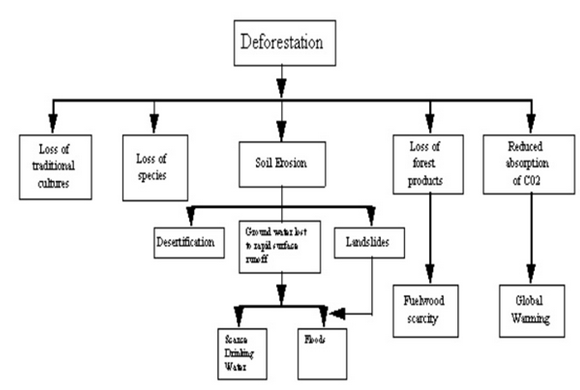
Plants are the main source of oxygen. They take in carbon dioxide and release oxygen thereby maintaining environmental balance. Forests are being depleted for many domestic and commercial purposes. This has led to an environmental imbalance, thereby giving rise to global warming.The Deforestation is one of the main reasons of global warming. Cutting and burning of about 34 million acres of trees every year results in urbanisation and the land for factories timber lead to deforestation. In addition to the deforestation, the below mentioned GHG’s contributes to the global warming.
Use of Vehicles
The use of vehicles, even for a very short distance results in various gaseous emissions. Vehicles burn fossil fuels which emit a large amount of carbon dioxide and other toxins into the atmosphere resulting in a temperature increase.
Chlorofluorocarbon
With the excessive use of air conditioners and refrigerators, humans have been adding CFCs into the environment which affects the atmospheric ozone layer. The ozone layer protects the earth surface from the harmful ultraviolet rays emitted by the sun. The CFCs have led to ozone layer depletion making way for the ultraviolet rays, thereby increasing the temperature of the earth.
Industrial Development
With the advent of industrialization, the temperature of the earth has been increasing rapidly. The harmful emissions from the factories add to the increasing temperature of the earth.
In 2013, the Intergovernmental Panel for Climate Change reported that the increase in the global temperature between 1880 and 2012 has been 0.9 degrees Celsius. The increase is 1.1 degrees Celsius when compared to the pre-industrial mean temperature.
Agriculture
Various farming activities produce carbon dioxide and methane gas. These add to the greenhouse gases in the atmosphere and increase the temperature of the earth.
Overpopulation
An increase in population means more people breathing. This leads to an increase in the level of carbon dioxide, the primary gas causing global warming, in the atmosphere.
Global warming is the phenomenon of gradual increase in the average temperature of earth . It is caused by the release of greenhouse gases like carbon dioxide, methane, CFCs etc. into the atmosphere.
Effects of Global Warming
Following are the major effects of global warming:
Rise in Temperature
Global warming has led to an incredible increase in earth’s temperature. Since 1880, the earth’s temperature has increased by 1 degrees. This has resulted in an increase in the melting of glaciers, which have led to an increase in the sea level. This could have devastating effects on coastal regions.
Threats to the Ecosystem
Global warming has affected the coral reefs that can lead to the loss of plant and animal lives. Increase in global temperatures has made the fragility of coral reefs even worse.
Climate Change
Global warming has led to a change in climatic conditions. There are droughts at some places and floods at some. This climatic imbalance is the result of global warming.
Spread of Diseases
Global warming leads to a change in the patterns of heat and humidity. This has led to the movement of mosquitoes that carry and spread diseases.
High Mortality Rates
Due to an increase in floods, tsunamis and other natural calamities, the average death toll usually increases. Also, such events can bring about the spread of diseases that can hamper human life.
Loss of Natural Habitat
A global shift in the climate leads to the loss of habitats of several plants and animals. In this case, the animals need to migrate from their natural habitat and many of them even become extinct. This is yet another major impact of global warming on biodiversity.
The ecosystem and all living things are under severe threat from the rapid growth in global warming, deforestation, air, water, and other types of pollution. All living things, including people, plants, and animals, are negatively impacted by the environment’s degradation as a result of a wide range of human activities.Because a healthy environment is essential to sustaining human health and because everyone has a right to a healthy environment, the concept of environmental protection has been given fundamental significance. Environmental protection safeguards everyone’s health, and a healthy person fosters the vitally required environmental growth. To live in an environment which provides a pollution free atmosphere is not only a basic human right but also enhances human dignity. Principle of sustainable development is one such approach which if followed can fulfil the basic human right of having a dignified life.
The preamble of the constitution and environment protection
The Indian Constitution’s Preamble opens by proclaiming that the Indian people earnestly pledge to establish India as a socialist nation. This shows that our Constitution gives us access to a socialist social structure. attempting to address and address society problems first, rather than focusing on personal issues. What is best for the general population is crucial in this situation.
Socialism is the primary goal of the Preamble, and it is the state’s duty to carry it out by enacting strict regulations to rid the environment of all sorts of pollution. The state also has a duty to ensure that all living things have access to a good level of living in addition to a pollution-free environment. All the citizens of India intend to secure freedom which also includes securing justice. Justice can be interpreted and sought in many forms. Thus, citizens have a right to environmental justice. Increasing degradation of the environment is posing a great threat to the lives of living beings and hence, protecting the environment is becoming a crucial in each day of life because ignoring it would pose a serious threat to the environment at large.
The state is required to abide by all regulations, and because India is a Democratic Republic, its citizens have a very important right to scrutinize the state’s behaviour and the steps the government takes periodically to restore the environment..
Legislative powers and matters of environmental protection
Under the Indian Constitution, there are three types of lists, namely- Union, state and concurrent. Powers of the government are shared at the state and union level. Central government deals with the matters of union list, where state government deals with the matters of state list. Thus, the exclusive power to legislate the matters of union list, which is the list I, is with the Parliament. State list which is the list II covers matters like, sanitation, the health of the public, drainage, supply of clean water etc. It covers matters relating to defence, military, atomic energy, regulation of oil fields, air traffic etc.
The concurrent list’s (list III) issues fall under the purview of both the state and the federal governments. It addresses issues including population management, mine preservation, forest and wildlife protection, and many others. Nonetheless, if a dispute arises, the central government’s decision is final.
Part XI of the Constitution deals especially with the interactions between the national and state governments in terms of legislation and administration. The country’s Parliament, as opposed to each state’s state government, has the authority to enact laws that apply to the entire nation.
In the situation of national emergency, Parliament has the power to legislate the state subjects also. The division of these legislative powers is essential to make provisions which can deal with environmental problems. There are various projects taken up by the state to develop the environment but they might pose a serious threat to the environment. In such circumstances there is always a conflict between development and environment protection and such matters are dealt through the Environment Impact Assessment (EIA). This has also been recognized by the planning commission.
International Environmental Agreements
India has been a signatory to a myriad of international agreements pertaining to environmental preservation. Because it was agreed upon in the Stockholm Declaration in 1972 that there is only one environment on Earth. India is required to translate these provisions and implement them in the nation as a signatory to such international agreements. The Indian Constitution’s Article 51(c) makes it very apparent that the country must promote adherence to international law and treaty responsibilities..
Article 253 of the Constitution, which gives the Parliament of our nation the power to pass laws that can be applied to the entire or any territory of the country for implementing any agreement or convention signed with the other country or countries, is another crucial provision that deals with protecting the environment.
Parliament may also pass laws to carry out decisions made at international conferences. Any provision made in connection with environmental protection in line with Article 253 read with Articles 13 and 14 cannot be contested in court on the grounds that the legislator lacked the authority to make the provision.
It is important to be aware that Parliament passed the Environment Protection Act of 1986 and the Air (Prevention and Control of Pollution) Act of 1981 in order to employ this power. The Preamble of these statutes makes it abundantly plain that the goal of their passage was to put into effect the resolutions made at the 1972 Stockholm United Nations Conference on the Human Environment.
In Vellore Citizens’Welfare Forum Vs. Union of India, the supreme court held that it is essential to incorporate the international customary laws in the municipal laws, provided they are not contrary to them. It is an accepted principle of law. Thus, it was considered essential to follow international laws by the domestic courts of law.
Obligation of State and Environmental Protection
In order to serve the interests of the voters who chose them, the authorities have a duty to uphold the law and maintain order. According to Article 47, the state is required to take into account the rising level of nutrition and standard of living of its citizens. Also, the state’s main responsibility is to promote public health. Alcohol and drug use, which can be harmful to the health of living things and seriously endanger their lives, must be outlawed by the state, with the exception of for medical reasons.
From the word “responsibility” it can be interpreted that state shall take effective, adequate and necessary steps to improve the health and standard of living of all and promote awareness in the context of environmental protection. In the environment development projects cannot be taken up by the individuals which harm society as a whole. Thus, the state needs to keep a stringent check on these activities and projects.
The amount of pollution in the environment is constantly rising for a number of reasons. For instance, the draining of dirty water from rivers, which not only contaminates the nation’s natural resources but also harms the health of its population, is a common cause of water pollution. As a result, it became imperative to enact legislation requiring the state to safeguard the environment.
In the case of Hamid Khan Vs. State of Madhya PradeshAIR 1997 MP 191,,the state was negligent to supply water from the hand pumps, colossal damage was caused to the citizens, which affected their health massively. Hence, due to this gross negligence on the part of the state, it was held that the state failed to perform its basic duty.
The constitution was amended in 1976. With this modification, Article 48-A was added to the constitution with the intention of providing for improved environmental protection and preservation protections. The clause in this article requires the state to safeguard the nation’s forests and wildlife as well as to maintain and improve the environment. In this article, the term “Environment” has been used in many different ways. The state must take appropriate action to improve the environment in addition to acting as a protectionist.
Every natural resource is interconnected with other natural resources of this country. Forests are directly linked with providing pollution-free air, helps in reducing global warming and is also connected with water resources. They help in maintaining the ecological balance. Thus, this resource is crucial and hence, its protection is equally important to avoid atmospheric pollution. Hence, the specific insertion of this section is justified.
Obligation of citizens and environmental protection
The rights of the people are essentially what the state is required to do in order to protect the environment. Both the idea of rights and that of duties coexist. They are linked together. Citizens must conserve the environment and refrain from engaging in actions that endanger the health of the entire community as well as all other living things if they want to maintain a reasonable standard of life and a pollution-free environment.
Prior to the 42nd amendment to the constitution, the idea of rights was much more common than the idea of duties. The ultimate law of the land gave rights a higher priority than obligations. Yet, the constitution’s authors believed that both the state and its inhabitants must share responsibility for environmental protection. Moreover, people began to overlook their obligations in favour of their rights. The Constitution (Forty Second) Amendment Act of 1976 therefore included part IV-A.
Part IV-A of the constitution deals with Fundamental Duties.Article 51-A (g) specifically deals with the fundamental duty of the citizens to protect and improve the natural environment which includes forests, rivers, lakes, wildlife and to have compassion for living creatures. Like the duty of the state, it is the duty of all the citizens of not only protecting the environment but also taking measures which are adequate enough to improve the environment.
Nature has endowed us with resources and a pollution-free environment, and as such, it is the responsibility of the people to preserve these resources for future generations. As a result, the notion of intergenerational justice is crucial to the sustainable use of natural resources that protects the environment.
In Kinkeri Devi V State, Himachal High Court that in Article 48-A and Article 51-A(g) it was held that it is both constitutional pointer to the state and the constitutional duty of the citizens not only protect the environment but also improve it and to preserve and safeguard the forests, the flora and the fauna, the rivers and the lakes and all other water resources of the country.
The negligence to abide by the pointer or perform the duty is nothing basically the straight betrayal of the fundamental law of the land. In the case of betrayal, the courts cannot remain a silent spectator. A court can intervene at any time to make the implementation of the provisions by issuing writs, orders and directions as it thinks fit and necessary.
In L.K Koolwal Vs State of Rajasthan and Ors AIR 1988 Raj 2 , the municipality of Jaipur was being negligent in carrying on its basic duty of maintaining the hygiene of the state. This caused acute sanitation problem thereby leading to the to have hazardous effects on the lives of the people of the state. Mr Koolwal along with other residents moved an application under Article 226of the Indian constitution before the high court highlighting the gross negligence of the municipality.
The court explained that, in determining the true scope of Article 51-A in this case, it is not only a duty but also a right to move to court to have a check on the government’s activities and determine whether or not the authorities are carrying out their duties in accordance with the country’s fundamental laws. For the correct execution of the obligations of the state, as well as of their relevant departments, municipal bodies, etc., citizens are allowed the right to file a court case.
Neglecting to maintain hygiene and sanitation standards poisons the environment as a whole and slowly impacts the lives of living things. This violates the citizen’s fundamental right to life, guaranteed by article 21 of the constitution, which also includes the right to a decent standard of living and a clean and safe environment. As a result, it is justified for citizens to protect their fundamental right to life from being violated. As a result, the court ordered the municipality to remove all of the filthy material that was endangering the lives and health of the populace.
In another case of Goa Foundation Vs. the State of Goa, PIL WP 32/2017 the petitioner was a society registered under the rules relating to registration of societies and its members were the citizens of India who had a fundamental duty to protect and improve the environment, lakes, forests, rivers and have compassion for living creatures as laid down under article 51-A . The question of whether the society had locus standi to move to the court or not was raised before the court.
The court answered this question in a strong affirmative, holding that society had the same fundamental obligation. The petitioner was determined to have locus standi to petition the court in order to not only stop the degradation of our ecology but also to create and carry out policies aimed at repairing the ecology and upholding ecological balance.
Public interest litigation was filed before the high court by five persons, who were residents of a specific area, in the case of Sitaram Champaran Vs. State of BiharAIR 1960 Pat 288, 1960 (1) to seek the directions of the court for the closure of the tyre retreading plant, in the interest of public health. This plant was situated in the residential area and was emitting carbon dioxide along with other obnoxious gases causing harm to the environment. The respondents were directed to wind up the plant in the interest of environmental protection and were considered a fundamental duty under Article 51-A.
Right to life and Environment Protection
Article 21 of the constitution provides for the fundamental right of life. It states that no person shall be deprived of his right to life or personal liberty except in accordance with procedures established by law. The words “except in accordance with procedures established by law” can be interpreted to mean that this provision is subject to exception and is regulated by law which varies from case to case.
Since the provision begins with the word ‘no’ that is the reason it has been given a negative impact. But post-Maneka period this provision has been given a positive interpretation and positively casts a duty on the state to enforce the due implementation of this law. Right to life includes the right to have a dignified life and also the bare necessities of life like food, shelter, clean water and clothes. The right to live extends to having a decent and clean environment in which individuals can live safely without any threat to their lives. An environment shall be free from diseases and all sorts of infections.
This is crucial because the right to life can be fulfilled only when one lives in a clean, safe and disease-free environment, otherwise granting such right would prove to be meaningless. This aspect of Article 21 has been evidently discussed in the case of Rural Litigation and Entitlement Kendra, Dehradun Vs. State of Uttar Pradesh1985 SCC (2) 431, where the petitioner along with the other citizens wrote to the supreme court expressing their views against the progressive mining which denuded the Mussoorie hills of trees and forests and soil erosion. This lead to having an adverse effect on the environment and resulted in landslides along with blockage of underground water channels.
The registry was ordered by the Hon’ble supreme court to consider this letter as a writ filed under Article 32 of the Constitution.
An expert committee was appointed in this behalf by the Supreme Court to advise the Hon’ble court with some technical issue. On the basis of the report provided by the expert committee, the court provided the limestone quarries to be closed because it was infringing the right to life and personal liberty. Quarrying operations lead to ecological degradation and air and water pollution, which affected the lives of the people to a great extent.
In L.K Koolwal v. State of Rajasthan and Ors, AIR 1988 Raj 2, 1987 Rajasthan High Court held that maintaining the quality of the environment, sanitation and health is covered under the purview of Article 21 of the Constitution. Because non-compliance to do so can adversely affect the lives of many citizens and slow poisoning along with reducing the life of a citizen.
In Charan Lal Sahu V. Union of India , it was held that the duty of the state is to take adequate and effective steps for the enforcement and protection of Constitutional rights guaranteed under Article 21, 48-A and 51-A(g).
In M.C Mehta v. Union of India 1987 AIR 1086 , due to stone crushing activities in and around Delhi was causing a huge problem of pollution in the environment. The court was conscious of the inevitable consequences and the ecological problems caused due to the industrial activities in the country. In the name of environmental development, it cannot be permitted to degrade the quality of the ecology and increase different forms of pollution to the extent that it becomes a health hazard to the lives of all the citizens. It was further held that citizens have a right to fresh air and have a pollution-free environment in which they live.
Further, the scope of article 21 was broadened by the judiciary to include under its purview the right to livelihood as well. It includes the right of citizens to earn their livelihood along with the right to life. The wider interpretation of this article has proved to be beneficial in keeping a strict check on the conduct and actions of the government in the context of measures taken by the authorities to protect the environment. It is also beneficial in keeping a check on the activities of the state which can have a massive impact on the environment, health of the individuals and threat to the livelihood of poor.
Indian judiciary has been very conscious while dealing with the matters of development and the environment protection to avoid the conflict between the two aspects.
In the famous Taj Mahal Case1987 AIR 1086, ample of industries near Taj Trapezium Zone were using coke and coal as an industrial fuel. These industries were ordered to be relocated to an alternative site as provided under Agra Master Plan. The rights and duties of the workmen in the industries were also specified by the court following the principle of sustainable development.
Right To Equality and Environmental Protection
Equality before the law and equal protection of the law has been granted under Article 14of the Constitution. This fundamental right impliedly casts a duty upon the state to be fair while taking actions in regard to environmental protection and thus, cannot infringe article 14. In cases of exercise of arbitrary powers on behalf of the state authorities, the judiciary has played a strict role in disallowing the arbitrary sanction. Use of discretionary powers without measuring the interest of the public violates the fundamental right of equality of the people.
In Bangalore Medical Trust V. B.S. Muddappa 1991 AIR 1902 an improvement scheme was prepared by the City Improvement Board of Bangalore for the purpose of extending the city. A low-level park was to be developed for which an area was kept under this scheme. But under the direction of the chief minister the area kept for the low-level park was to be converted into the civic amenity site where the hospital was to be constructed. As soon as the construction began, the residents moved to the high court.
The petition moved in by the residents was allowed by the high court. But in appeal to the supreme court, the appellant contended that the power to allot sites is completely a discretionary one and the developing authority has the right to allow the site for making hospital rather than a park. And thus, the diverted use of the land was justified in the eyes of the appellant.
By explaining the importance of open spaces and parks in the development of urban areas, the supreme court rejected the appeal. The Hon’ble court further stated that the open spaces, recreation, playing grounds and protection of ecology are the matters of vital importance in the interest of public and crucial for the development. Keeping open spaces for the interest of the public is justified cannot be sold or given on lease to any private person solely for the sake of monetary gains.
Freedom of Speech and Expression and Environment
Right of speech and expression is a fundamental right expressly mentioned in Article 19 (1) (a) of Part III of the Constitution. There have been a number of cases where people have approached the court through the way of speech and expressing themselves by writing letters like that in the case of Rural Litigation and Entitlement Kendra, Dehradun v. State of Uttar Pradesh 1985 AIR 652where they have expressed the violation of their right to have a clean and safe environment and a right to livelihood.
In India, the media has been playing a crucial role in moulding the perception of people in issues relating to the environment. Thus, Article 19(1)(a) is interpreted to include the freedom of the press as well.
Freedom of Trade and Commerce and Environmental Protection
All the citizens of India have a fundamental right to carry on any profession or business, trade or commerce at any place within the territory of India under Article 19 (1) (g)of the Constitution. But this is not an absolute right and thus, has reasonable restrictions to it.Article 19 (6)of the Constitution lays down the reasonable restriction to this fundamental right to avoid the environmental hazards.
The purpose is to avoid the ecological imbalance and degradation of the atmosphere in the name of carrying on a trade, business, occupation or carrying on any profession. Thus, in the name of business or profession, one cannot cause harm to the environment.
InM.C Mehta Vs. Union of India, AIR 1988 SC 1037 certain tanneries were discharging effluents in the holy river Ganga which was causing water pollution. Further, no primary treatment plant was being set up despite the constant reminders. It was held by the court to stop the tanneries from working because the effluents drained were ten times more noxious as compared to the ordinary sewage water which flows into the river.
The court ordered while directing tanneries to be stopped from working which have failed to take necessary steps as required for the primary treatment of effluents from the industries. The court while passing this order contended that, though the court is conscious about the unemployment that might usher due to the closure of the tanneries but health, life and ecology holds greater importance in the eyes of law.
In M.C Mehta v. Union of India, 1994, it was directed by the Supreme Court that the industries who did not comply or adhere to, with the prior direction of the Hon’ble court regarding the installation of air pollution controlling system should be closed. In this case, the supreme court laid down its greater emphasis on Article 19(6) of the Constitution.
Ins. Jagannath Vs. Union of India, sea beaches and sea coasts were considered to be the gifts of nature, by the Hon’ble supreme court and any such activity which pollutes these natural resources or the gift of nature cannot be permitted to function. In this case, a shrimp farming culture industry by modern method causing degradation to the ecosystem, discharge of polluting effluents, polluting the potable ground-water and depletion of the plantation. All of these activities were held to be violative of constitutional provisions and other legislation dealing with environmental matters, by the court.
The court further held that before the installation of any such industry in a fragile coastal area it is essential for them to necessarily pass the strict environmental test. In other words, reasonable restrictions can be laid in accordance with Article 19(6) of the Constitution.
Role of the Supreme Court in environmental protection
In lieu of the wide range of cases dealt by supreme court with regard to environmental protection, a plethora of judgements have been passed which have laid down various principles to be taken care of before indulging in any activity which might pose a threat to the environment. Also, different aspects of the environment have been highlighted by giving them immense importance like natural resources. Air and water have been given the status of the gift of nature and inalienable part of life.
While incorporating the important features to the fundamental right provided in Article 21, certain principles were ascertained by the supreme court to be necessarily ensured for the protection of the atmosphere, which are as follows-
Polluter Pays Principle
The basic concept behind this principle is that “ if you make a mess, it becomes your duty to clean it up”. The polluter pays principle does not lay emphasis on the ‘fault’ rather on the curative approach to repair the ecological damage caused by any person or group of persons. This principle was for the first time referred to in the year 1972 in the OECD Guiding Principles concerning International Economic Aspects of Environmental Policies.
Further, this principle was also applied in the case of Vellore Citizens Welfare Forum v. Union of India. In M.C Mehta v. Union of India and Ors( Calcutta Tanneries Case) 1996 5 SCR 241, the polluter pays principle was applied where industries were directed to be relocated and these industries were ordered to pay 25% of the cost of the land.
The industries which did not pay the cost of the land and did not comply with the direction of the court were further directed to be closed. The Hon’ble court again restored to the directions which were earlier given in the Vellore Citizens Welfare Forum v. Union of India.
Precautionary Principle
Principle 15 of the Rio Declaration provides for the precautionary principle. According to this. In order to protect the environment, it is essential to apply the precautionary principle. This principle means that where there is a chance of great threat or irreversible damage to the environment, lack of full scientific certainty cannot be taken as a reason of not issuing the cost-effective methods.
In M.C Mehta v. Union, popularly known as Taj Mahal Case, was another judgment of the court passed on the basis of the precautionary principle. In this case, public interest litigation was filed alleging the degradation of Taj Mahal due to environmental pollution. Court referred the case to the expert committee to seek technical advice on the matter. On the basis of the report of the committee. This monument is a monument of international repute. The industries located in the Taj Trapezium Zone(TTZ) were using coke/coal as the industrial fuel, thus emitting effluents.
It was held by the court that, the Taj apart from being a cultural heritage, is also an industry by itself and thus, it was directed to all the industries operating in TTZ to use natural gas as a substitute for coke/coal as an industrial fuel and if they cannot be restored to it for any reason, they must stop functioning and they may relocate themselves as per directions of the .`The industries on the relocation in new areas were to be given the incentives.
The doctrine of Public trust
This philosophy is based on the idea that certain resources, such as air, water, and other necessities for daily existence, are of such tremendous significance to the general populace that giving them to private ownership is wholly unreasonable. These resources should be made freely available to every member of society, regardless of their standing in life, since they are a gift from nature. According to the idea, the government must safeguard resources so they can be used by the general public rather than being used by an individual for personal financial benefit..
Thus, commercial use of natural resources is completely prohibited under this doctrine. For the effective and optimum utilization of resources, this doctrine mandates an affirmative action of the state authorities. Also, citizens are empowered to question the authorities if resource management is ineffective.
In M.C Mehta V Kamal Nath,1997, the state government granted a lease of riparian forest land to a private company having a mote located at the bank of river Beas, for commercial purposes. The hotel management was intervening with the natural flow of the river by blocking the natural spill channel of the river. This was questioned before the court through public interest litigation. The court explained the scope of public trust doctrine and observed that the doctrine rests on the primary principle that certain resources like air, water, sea and forests have great importance to people and it would be unjustified to make them subject to private ownership.
Sustainable Development
At the Cocoyoc Declaration, the phrase “sustainable development” was first used. The Stockholm Declaration, which said that there is only one environment in the world and that man both creates and shapes it, gave it additional momentum in the years that followed. Also, the Brundtland report defined sustainable development as the best possible use of resources for both the present and the generations to come. Intergenerational equity is therefore essential. For both current and future generations, resources must be safeguarded.
Conclusion
The first section of this article lays forth the reasons why environmental protection is important, how the necessity for environmental protection came about, and the factors that contribute to ecological degradation. Many factors have been identified as important contributors to environmental pollution, human health issues, and a serious threat to the country’s other living things. The term “environment” was not specifically mentioned in the Constitution in the past, and there were no provisions in place to address environmental hazards and control human behaviour that was significantly contributing to the degradation of the environment while purporting to be exercising fundamental rights.
A remedy for this significant health risk was found in the 42nd Amendment to the Indian Constitution. The article’s provisions are highlighted from the base up in order of appearance. starting with the Preamble to the Constitution’s usage of the phrases “democratic,” “socialist,” and “republic,” as well as its relation to environmental preservation. The state has a responsibility to protect the environment because, as an institution chosen by the people, it must serve them. The idea of rights and obligations has since been discussed, including the right of a citizen to a healthy environment as well as the duties of citizens to safeguard and preserve the environment in which they live.
Biological Diversity means the variability among living organisms from all sources, including interalia, terrestrial, marine and other aquatic ecosystems and the ecological complexes of which they are part and this includes diversity within species, between species and of ecosystems. Biodiversity is defined as the variety and variability among living organisms and the ecological complexes in which they occur is measured at three levels viz., genes, species and ecosystem.
The act was enacted in 2002, it aims at the conservation of biological resources, managing its sustainable use and enabling fair and equitable sharing benefits arising out of the use and knowledge of biological resources with the local communities.
Salient Features of the Biological Diversity Act – 2002:
After an extensive and intensive consultation process involving the stakeholders, the Govt. of India has brought Biological Diversity Act, 2002. •
To regulate access to biological resources of the country equitable share in benefits arising out of the use of biological resources.
To conserve and sustainable use of biological diversity.
Setting up of National Biodiversity Authority (NBA), State Biodiversity Board (SBB) and Biodiversity Management Committee’s. (BMC’s).
NBA and SBB are required to consult BMCs in decisions relating to bioresource / related knowledge within their Jurisdiction.
To respect and protect knowledge of local communities traditional knowledge related to biodiversity.
To secure sharing of benefits with local people as conservers of biological resources and holders of knowledge and information relating to the use of biological resources.
All foreign nationals / organizations require prior approval of NBA for obtaining biological resources and / or associated knowledge for use.
Indian scientists / individuals require approval of NBA for transferring results of research to foreign nationals / organizations.
Conservation and development of areas of importance from the standpoint of biological diversity by declaring them as biological diversity heritage sites.
Protection and rehabilitation of threatened species.
Involvement of institutions of State Government in the broad scheme of the implementation of the Biological Diversity Act through constitution of committees.
Protect India’s rich biodiversity and associated knowledge against their use by foreign individuals and organizations without sharing benefits arising out of such use and check Biopiracy.
Indian Industry needs prior intimation to SBB to obtain bioresource. SBB has right to restrict if found to violate conservation and sustainable use and benefit sharing.
Provisions for notifying heritage sites by State Government in consultation with local body.
Creation of National, State and Local Biodiversity Fund and its use for conservation of biodiversity.
Prior approval is needed from NBA for IPRs in any invention in India or outside India on Bioresource
Exemptions from the Act
The Act excludes Indian biological resources that are normally traded as commodities. Such exemption holds only so far the biological resources are used as commodities and for no other purpose. The act also excludes traditional uses of Indian biological resources and associated knowledge and when they are used in collaborative research projects between Indian and foreign institutions with the approval of the central government. Uses by cultivators and breeds, e.g. farmers, livestock keepers and bee keepers and traditional healers e.g. vaids and hakims are also exempted.
Framework of Biological Diversity Act, 2002
A three-tiered framework was envisioned by the legislation to control access to biological resources:
The National Biodiversity Authority (NBA)
The State Biodiversity Boards (SBBs)
The Biodiversity Management Committees (BMCs) (at local level)
The National Biodiversity Authority(NBA)
The National Biodiversity Authority (NBA) was established in 2003 by the Central Government to implement India’s Biological Diversity Act (2002). It is a Statutory body that performs facilitative, regulatory and advisory functions for the Government of India on the issue of Conservation and sustainable use of biological resources. Structure of the NBA The National Biodiversity Authority consists of the following members to be appointed by the central government, namely: * A Chairperson. * Three ex officio members, one representing the Ministry dealing with Tribal * Affairs and two representing the Ministry dealing with Environment and Forests. * Seven ex-officio members to represent respectively the Ministries of the * Central Government dealing with: * Agricultural Research and Education * Biotechnology * Ocean Development * Agriculture and Cooperation * Indian Systems of Medicine and Homoeopathy * Science and Technology * Scientific and Industrial Research; * Five non-official members to be appointed from amongst specialists and scientists having special knowledge and experience in the required matters.
Functions and Powers of NBA:
• Regulate activities, approve and advice the government of India on research, commercial, bio-survey and bio-utilization. • Grant approval to Section 3,4 and 6. • Certain persons not to undertake Biodiversity related activities without approval of National Biodiversity Authority (Section 3). • Results of research not to be transferred to certain persons without approval of National Biodiversity Authority (Section 4). • Application for IPR rights not to be made without approval of National Biodiversity Authority (Section 6). • Perform such other functions as may be necessary to carry out the provisions of this act. Approvals by NBA: • Any person who intends to access or apply for a patent or any other form of IPR protection whether in India or outside India referred to sub-section (1) of Section 6 may make an application prescribed by NBA. • Any person who intends to transfer any biological resource or knowledge associated thereto referred to sub-section (1) of Section 3 shall make an application in such form and in such manner as may be prescribed to the National Biodiversity Authority. • Determination of equitable benefit sharing by National Biodiversity Authority.
State Biodiversity Boards (SBBs)
The SBBs are established by the State Governments in accordance with Section 22 of the Act.
Structure: The State Biodiversity Board consists of the following members: * A Chairperson * Not more than five ex officio members to represent the concerned Departments of the State Government * Not more than five members from amongst experts in matters relating to conservation of biological diversity, sustainable use of biological resources and equitable sharing of benefits arising out of the use of biological resources. * All the members of the SBB are appointed by the respective State Governments.
Functions of SBBs
Advise the State Government, subject to any guidelines issued by the Central Government, on matters relating to the conservation, sustainable use or sharing equitable benefits.
Regulate by granting approvals or otherwise requests for commercial utilisation or bio-survey and bio-utilisation of any biological resource by people. Note: There are no State Biodiversity Boards constituted for Union territories. The National Biodiversity Authority exercises the powers and performs the functions of a State Biodiversity Board for the UTs.
Biodiversity Management Committees (BMCs)
According to Section 41 of the Act, every local body shall constitute the BMC within its area for the purpose of promoting conservation, sustainable use and documentation of biological diversity including: Preservation of habitats Conservation of Landraces Folk varieties and cultivars Domesticated stocks And breeds of animals Microorganisms And Chronicling Of Knowledge Relating To Biological Diversity.
Structure
It shall consist of a chair person and not more than six persons nominated by the local body. Out of total members of a BMC, not less than one third should be women and not less than 18% should belong to the Scheduled Castes/ Scheduled Tribes. The Chairperson of the Biodiversity Management Committee shall be elected from amongst the members of the committee in a meeting to be chaired by the Chairperson of the local body. The chairperson of the local body shall have the casting votes in case of a tie. Functions * The main function of the BMC is to prepare People’s Biodiversity Register in consultation with the local people. * The register shall contain comprehensive information on availability and knowledge of local biological resources, their medicinal or any other use or any other.
National Biodiversity Fund:
A National Biodiversity Fund is being constituted for this purpose. The NBA will ensure that equitable benefit sharing is made during the utilization of biological resources and the knowledge relating to them. The amount of benefit sharing will be deposited in the National Biodiversity Fund and the amount shall be paid directly to such individuals or groups of individuals or organizations in accordance with the terms of any agreement in such manner as decided by the NBA. On behalf of the Central government, the NBA will take all measures to oppose Intellectual Property Rights granted outside India on any biological resource or associated knowledge originating from India.
Conclusion:
The conservation and sustainable use of biological diversity is critical importance of meeting of food, fodder, fiber, health, water and other needs of growing world population for which purpose, access to and sharing of both genetic resources and technologies are essential. It should be determined to conserve and sustainable use of biological diversity for the benefit of present and future generations.The intrinsic value of Biological diversity and of the ecological, genetic, social,economic, scientific, educational, cultural, recreational and aesthetic values and its components are to be taken care properly for the better management of biological resources and biodiversity for the welfare of human beings for better, and healthier as well as peaceful living on earth. The conservation of biological diversity is a serious and common concern of human beings for better living.
The fact that India has made a really strong push to safeguard the environment is to the credit of its courts, especially the higher judiciary. In fact, it wouldn’t be overstating things to suggest that the expansion and development of India’s legal system are closely linked to the country’s environment law development. A sub-continental nation-state with the second-largest population in the world—the majority of whom live in abject poverty and illiteracy—and startling cultural, economic, and ethnic diversity—poses really unique governance issues.
Many fundamental rights are outlined in the written Constitution that the people themselves created when they won independence, but enforcing these rights has not always been simple. The courts were viewed as the final remaining bulwark of the people’s rights and liberties as a result of numerous political upheavals.
In particular, the 1980s saw an activist judiciary at work during the post-emergency period, and this was also the time when fresh and intriguing innovations in environmental law occurred. The emphasis changed away from the traditional strategy of pursuing environmental violations as criminal offences and/or civil wrongs and towards the strategy of treating environmental issues as a component of the fundamental rights protected by the written Constitution.
Conspectus of constitutional provisions and legislation
Environment protection and improvement are clearly outlined in the Indian Constitution. In accordance with Article 48A of Chapter IV of the Indian Constitution’s Directive Principles of State Policy, the State is obligated to preserve the nation’s forests and wildlife as well as to protect the environment. Every citizen of the nation has a responsibility to safeguard the environment and advance it, according to Article 51A(g).
Although not enforceable in a court of law, an activist judiciary has given effect to the objective underlying these Principles by reading them in conjunction with the fundamental rights, which are enforceable in a court of law.
According to the Supreme Court, Art 21’s guarantee of the right to life does not only apply to animal life. Later, this article was understood to include the right to a pollution-free environment as part of its purview. Prerogatives may be issued under the provisions of Articles 32 and 226 and other writs may be used to obtain relief. A violation of a basic right may be brought directly before the Supreme Court under Art. 32. A High Court may issue a writ under Art. 226 if any legal right or basic freedom has been violated. Moreover, decisions regarding the extension of the locus standi principle for applying these provisions were used to safeguard against environmental degradation.
Perhaps the most important piece of legislation in this field of law is the Environment Protection Act 1986. Enacted in the wake of the Bhopal Gas Tragedy, this Act covers the whole gamut of environment issues. ‘Environment’ has been defined under the Act to include water, air and land and the inter-relationship which exists among and between them and human beings, other living creatures, plants, micro-organisms and property. The Act empowers the central government to take such measures as it deems necessary to protect and improve the quality of the environment and to prevent, control and abate environmental pollution. An ‘umbrella’ legislation, this Act authorises the Central government, inter alia, to set new standards for emissions etc., regulate location of industries, devise procedures for handling hazardous substances, safeguard against accidents causing environment pollution and generally collect and disseminate information regarding environmental pollution.
The common law principle of ‘nuisance’ offers a legal basis for initiating action against environmental violations. The Code of Civil Procedure 1908 (‘CPC’), the Indian Penal Code 1860 (‘IPC’) and the Code of Criminal Procedure 1973 (‘CrPC’) contain provisions in respect of public nuisance. Section 91 of the CPC entitles two or more persons to institute a suit for a public nuisance affecting or likely to affect the public. In the Bhopal Gas Tragedy, the Central Government enacted the Bhopal Gas Leak Disaster (Processing of Claims) Act 1985, conferring on it the exclusive right to represent the claims of the victims in parens patriae suits. The validity of this legislation was upheld by the Supreme Court in Charan Lal Sahu v Union of India. Public nuisance is an offence punishable under the IPC. Several provisions of the IPC deal with various types of nuisance which cause public injury. The CrPC under s133, empowers a magistrate to remove a public nuisance of an environmental nature, ss 142 and 144 empower the magistrate to take immediate action to prevent danger or injury of a serious kind. The Ratlam case in 1980 is a major landmark in terms of the application of this provision as an effective tool for enforcing duties of local bodies. The case concerned provision of drainage facilities by the local body to the residents of the area. The financial inability pleaded by the council for not providing the facilities was rejected by the Supreme Court by holding that ‘decency and dignity are non-negotiable facets of human rights and are a first charge on the local self governing bodies’. Even before this decision, the Supreme Court in the case of Govind Singh v Shanti Swaroop dealing with nuisance caused by smoke emanating from a bakery, held that what is involved is not merely the right of a private individual but the health, safety and convenience of the public at large.
The Air Act 11 and The Water Act establish a framework of regulation and control of the release of pollutants through a system of licencing and permits. State and Central Boards that were created with this objective in mind are in charge of enforcing the provisions. Penalties, which now include the closure of an industry or factory, are imposed for infractions of the criteria outlined by these laws. The Water Cess Act levies a fee on water use that goes towards upholding The Water Act’s rules. According to the Act, the cess that must be paid upon installing wastewater treatment equipment is refunded 70%.
Both the Forest (Conservation) Act of 1980 and the Indian Forest Act of 1927 are significant. The subsequent Act provides for Central Government approval for dereserving a reserved forest, using forest land for non-forest purposes, assigning forest property, and other reforestation-related matters. The Wild Life Protection Act of 1972, The Atomic Energy Act of 1962, and The Factories Act of 1948 may also be mentioned.
The Hazardous Wastes (Management and Handling) Regulations of 1989 and the Hazardous Microorganisms Rules of 1989, which cover the production, use, import, export, and storage of hazardous microorganisms and genetically modified cells, are also rules created under the Environment Protection Act.
The National Environment Tribunal Act of 1995 and the Public Liability Insurance Act of 1991 may also be mentioned. In order to give the victim the least amount of assistance possible, the Public Liability Insurance Act mandates public liability insurance for installations handling hazardous materials. According to the Environment Tribunal Act, handling hazardous substances can result in mishaps that result in severe accountability for damages. The Act gives the Central Government the power to create a national tribunal and benches that can conduct hearings and issue decisions that seem to be “fair.” In reality, the Supreme Court recently allowed the courts to refer the more technical and scientific components of environmental issues that stem from Articles 32 and 226 of the Constitution.
Public interest litigation and environment law
One unusual aspect of the development of environment legislation in India is that significant changes in the law have been brought about by non-governmental organisations and civic-minded people. As was previously indicated, the development of new methods of delivering justice during the 1980s led to the judiciary taking on a more activist role. By extending the locus standi concept, the courts were able to overcome the restrictions placed on them by the conventional adversarial system.
In the well-known SP Gupta case, the Supreme Court ruled that any member of the public acting in good faith may bring a claim for compensation when the state is at fault for a public wrong or injury. It is noteworthy that the court decided that a member of the public may approach the court on behalf of a person or people who have been wounded but are unable to contact the courts due to impairments such poverty, social hardship, or economic hardship. By relying on Articles 32 and 226 of the Constitution, environmental groups and individuals have frequently used this enlargement of locus standi to seek redress against environmental destruction.
It is important to remember, nevertheless, that the enlargement of locus standi to allow any member of the public to petition a court to uphold the public interest is not without its drawbacks. The courts have not been hesitant to sharply condemn activities that are not in good faith and to discourage them altogether. In the Chhetriya Pardushan case, the Supreme Court said unequivocally that “… this can only be done by any person interested truly in the protection of the society on behalf of the society or the community.” The court must be extremely cautious and careful when using this weapon as a safeguard.. While it is a duty of this court to enforce fundamental rights, it is also the duty of this court to ensure that this weapon … should not be misused or permitted to be misused …’. More recently in the Raunuq International case, the Supreme Court has held that if any developmental project were to be stalled by reason of any public interest action before a court of law and ultimately, it is found that the action is not bona fide, the petitioner would be liable to pay exemplary costs. It can be seen therefore that while the scope of public interest litigation is extensive, courts have taken care to see that it is not abused.
March of the law
The Supreme Court’s innovative approach, in particular, is responsible for a significant percentage of the jurisprudence in this field. First off, it wasn’t explicitly stated in court rulings that a clean environment was a fundamental right. The Supreme Court ruled that individuals had the right to live in a healthy environment with little disruption of the natural balance in a case involving limestone quarries in the Doon Valley that caused soil erosion, deforestation, and other environmental problems. Later on, the court referred to the fundamental duty of a citizen to preserve the environment. It was in the Bhopal Gas Leak case21 that the Supreme Court declared in explicit terms that the right to a pollution-free environment is a part of the right to life under Art.
It would at this juncture be appropriate to refer to some other leading decisions, the significance of these rulings is that the courts have held principles like ‘Sustainable Development’, ‘Polluter Pays’ and ‘precautionary principle’ to be a part of the law of the land, though there has bee no specific incorporation of these principles to the municipal law.
In the Vellore Citizens Forum lawsuit, it was hoped to put an end to the extensive pollution that the tanneries in Tamil Nadu, a southern state, were responsible for. The Supreme Court ruled that “sustainable development” has been recognised as a component of accepted international law since it strikes a balance between ecology and development. The Bruntland Report, the UN Convention on Climate Change, and other documents were cited by the court in this regard. These documents ranged from the Stockholm Declaration to the Rio Declaration. Holding further that the ‘precautionary principle’ and the ‘polluter pays’ are essential attributes of ‘sustainable development’, the court read these to be part of municipal law as they do not conflict with the Constitution and statutory law in force in India. The court went on to grant various reliefs including the creation of an ‘environmental fund’, constituted by the fines paid by the polluters to be utilised for reclamation of the affected areas and rehabilitation. The ‘polluter pays’ and ‘precautionary’ principles were also applied in subsequent cases like the Calcutta Tanneries case, the Shrimp Farming case, the Taj Trapezium case and the Kamalnath case.
Because the public trust theory was applied in the Kamalnath case, it deserves special emphasis. The artificial diversion of a river in forestland to increase a motel’s amenities alarmed the court because of the ecological harm it would cause. The Supreme Court stated: “Our legal system, which is based on English common law, includes the public trust doctrine as part of its jurisprudence while imposing the burden of rehabilitating the environment and ecosystem.. The state is the trustee of all the natural resources, which are by nature meant for public use and enjoyment. The public at large is the beneficiary of the seashore, running waters, air, forests and ecologically fragile lands. The state as a trustee is under a legal duty to protect the natural resources. These resources meant for public use cannot be converted into private ownership”.
Some decisions have gone beyond the traditional standard of strict liability and have imposed ‘absolute liability’ on polluting industries. In the Oleum Gas Leak case, the Supreme Court was concerned with the leakage of oleum gas resulting in death and injury. Even though stringent conditions were laid down for re-starting the industry, the court held the industry to be absolutely liable for the pollution caused. The court said “we have to evolve new principles and lay down new norms which would adequately deal with the new problems which arise in a highly industrialised economy”. The court further held “(w)here an enterprise is engaged in a hazardous and inherently dangerous activity and harm results to anyone on account of an accident in the operation of such hazardous and inherently dangerous activity, for example, in the escape of toxic gas, the enterprise is strictly and absolutely liable to compensate all those who are affected by the accident…”. Later on, in the Indian Council for Enviro-Legal Action case, the Supreme Court referring to this principle said, “according to the rule, once the activity carried on is inherently dangerous, the person carrying on such activity is liable to make good the loss caused to any person by his activity irrespective of the fact whether he took reasonable care while carrying on his activity. It was in this ruling that for the first time the principle of ‘polluter pays’ was applied by citing the Rome Declaration.
The Taj Trapezium case involved protection of the Taj Mahal from the air pollution caused by the coal based industries nearby. The anxiety of the court in preserving this monument is well reflected: “the atmospheric pollution in TTZ has to be eliminated at any cost. Not even one per cent chance can be taken when the preservation of a prestigious monument like the Taj is involved”.
It can therefore be seen that the courts in India have not felt constrained or constricted by the procedural limitations imposed by the law in force. The court has not hesitated to order relocation of industries from residential areas, has given directions for the creation of a fund for taking up remedial and rehabilitation action for affected areas and people and has ordered stoppage of any activity that is hazardous. The court has, on several occasions, directed installation of effluent treatment plants on a time-bound basis as a condition to recommencement of hazardous industries. In keeping with the spirit of public interest litigation, the court has often sought for and relied on reports from expert bodies to verify and ascertain the actual impact of any activity complained of. The Supreme Court has gone to the extent of establishing ‘green benches’ both in the Supreme Court and also in the various High Courts in the country to deal exclusively with environment cases. Presently, the Supreme Court is in the process of hearing two public interest writ petitions concerning India’s forests and the large-scale vehicle emissions in Delhi.
Conclusion
The emphasis on human rights in environmental law jurisprudence has led to the third generation right to development being acknowledged on a global scale. As a result, India’s legal system has evolved in a fashion that aims to raise everyone’s standard of living. In order to provide a substantive remedy, it is in fact a creative technique to interpret and implement the provisions of basic rights in conjunction with guiding principles of state policy and fundamental duties. Such a tactic would appear to a puritan to stray from accepted legal rules, but the urgency of the situation has justified it. There are important challenges that need to be addressed with the turn of the millennium and the globalisation that is happening in many spheres of society. Because fields like biotechnology are developing so swiftly, legal systems around the world must quickly catch up with the developments that are occurring. The Indian courts’ dynamism is a desirable strategy. The strategy used by Indian courts to provide meaningful relief and remedy to its citizens, who make up a sizeable fraction of the global population and live in a nation with some incredibly diverse ecosystems, should be taken into consideration and applied.
Environmental degradation is a result of the active interaction of socioeconomic, institutional, and technical processes. Environmental degradation is a process that results in a reduction in the biological diversity and health of the environment by compromising the natural environment in some way. Environmental degradation is defined as the deterioration of the physical elements of the environment brought about by human activities to the point where it cannot be corrected by the environment’s self-regulatory systems.
This process could start out entirely naturally or it might be accelerated or triggered by human activity. Environmental deterioration is considered a severe threat to communities and planets by several international organisations. Many variables, such as economic growth, population growth, urbanisation, intensification of agriculture, increased energy consumption, and transportation, may be responsible for environmental changes. Another significant issue that contributes to environmental issues is poverty. In contrast to the problems of growth and expansion, the economics of environmental pollution, resource depletion, and resource degradation have been disregarded. Due to its significant population growth, India is also experiencing issues with environmental deterioration.
Factors that Led Environmental Degradation
There are basically two factors namely:
1. Natural factors such as drought, storms on sea, land and deserts such as hurricanes, tornadoes, carina and volcanic eruptions. These factors lead to land degradation through erosion.
2. Human factors which include deforestation, industrialization and urbanization. These factors lead to water, air and land pollution.
Types of Environmental Degradation
Types of environmental degradation:
Deforestation
Deforestation is the process of logging and/or burning forests to remove them. Deforestation happens for a variety of causes, such as when trees or the charcoal they produce is utilised as fuel or sold as a commodity, and when cleared land is turned into pastureland for cattle, farms, and communities. Without enough regeneration, the removal of trees has harmed habitats, reduced biodiversity, and increased dryness. The bio-sequestration of atmospheric carbon dioxide is negatively impacted. Regions that have lost their forests typically experience severe unfavourable soil erosion and frequently become barren.
Causes of deforestation: There are several causes of current deforestation such as dishonesty of government institutions, the unfair distribution of wealth and power, population growth and overpopulation, and urbanization. Globalization is also major cause of deforestation, though there are cases in which the impacts of globalization have supported localized forest recuperate.
Extinction
It is the process by which a species, genus, or family, becomes extinct no longer existing and alive in the world. It is the eradication and destruction of anything that was once there in the world. It specifically refers to the termination of an evolutionary branch or line on the tree of life in the context of biology. A species’ extinction can have a profound impact on an ecosystem, as well as on the physical environment and climate, frequently resulting in other extinctions.
Desertification:
Due to a variety of factors, including climatic changes and human activity, desertification is the destruction of land in waterless and dry sub-humid environments. The main cause of desertification is human activity. It is mostly brought on by overgrazing, excessive groundwater withdrawal, and the diversion of river water for industrial and human usage. All of these processes are ultimately fueled by overpopulation. Reduced biodiversity and impaired productivity are the primary effects of desertification, as seen in the conversion of shrub-dominated land to non-native grasslands.
Causes of desertification:
Desertification occurs due to numerous factors, primarily anthropogenic causes, which began in the Holocene era and continues today. The primary reasons for desertification are overgrazing, over-cultivation, increased fire frequency, water impoundment, deforestation, over drafting of groundwater, increased soil salinity, and global climate change.
Multilevel set of causes of Desertification
Emission
Emission is a process when chemicals or other materials are released into the environment by humans or natural factors. Pollution is created through emission, which is what happens when chemicals are discharged into the atmosphere. Emissions come from numerous natural processes. A volcano’s eruption releases ash, acid, and numerous hazardous gases. Forest fires cause the production of carbon dioxide, dioxins, carcinogenic compounds, smoke, and soot.
Erosion
Erosion is the process of weathering and transporting solids from their source or the natural environment and depositing them elsewhere. Erosion typically happens as a result of soil and other materials being transported by wind, water, or ice, creeping down slopes under the force of gravity, or, in the case of bio-erosion, by living organisms like burrowing mammals.
A certain amount of erosion is natural and, it is good for the ecosystem. Erosion is different from weathering, which is the process of chemical or physical breakdown of the minerals in the rocks, although the two processes may occur simultaneously.
Causes of environmental degradation
Environmental conditions deteriorated and had an effect on human health as a result of increased human activity and the emission of hazardous chemicals. The reasons of environmental degradation are numerous. Rapid urbanisation and industrialization, agricultural expansion and intensification, and the eradication of natural habitats are all effects of the nation’s rapid population increase and economic development on the environment. The population is expanding at an unprecedented rate in India, which is negatively harming the environment and natural resources.
The increasing population and the environmental deterioration face the challenge of continued development without environmental damage. Population impacts on the environment is mainly through the use of natural resources and production of wastes and is related with environmental stresses like loss of biodiversity, air and water pollution and increased pressure on arable land.
Environmentalists have also cited poverty as a significant factor in environmental degradation. A very complicated phenomena is the revolving relationship between poverty and the environment. Because the poor rely more on natural resources than the rich, they may use up such resources more quickly due to inequality because they have less chance of accessing other resources. Additionally, a deteriorated environment might expedite the process of destitution, again because the poor depend directly on natural assets.
It has been observed that poor people migrate to urban areas due to lack of opportunities for profitable employment in villages and the ecological stresses. Extra-large cities are emerging and urban slums are expanding. Such rapid and unplanned development of cities has resulted in ruin of the urban environment. It has broadened the gap between demand and supply of infrastructural services such as energy, housing, transport, communication, education, water supply and sewerage and recreational amenities, thus depleting the valuable environmental resource base of the cities. The result is the growing trend in worsening of air and water quality, generation of wastes, the proliferation of slums and undesirable land use changes, all of which contribute to urban poverty.
There are some economic factors that lead to environmental degradation. Environmental degradation is the consequence of market failure, that is, the non-existent or poorly functioning markets for environmental goods and services. In this framework, environmental degradation is a particular case of consumption or production externalities reflected by divergence between private and social costs (or benefits). Market misrepresentations created by price controls and subsidies may exacerbate the achievement of environmental objectives.
Transport activities have intense effects on the environment such as air pollution, noise from road traffic and oil spills from marine shipping. Transport infrastructure in India has expanded significantly in terms of network and services. Thus, road transport accounts for a major share of air pollution load in cities such as Delhi. Port and harbour projects mainly impact on sensitive coastal ecosystems. Their construction affects hydrology, surface water quality, fisheries, coral reefs and mangroves to varying degrees.
Effect of agricultural development on the environment stems from farming activities which contribute to soil erosion, land salinization and loss of nutrients.
Effects of Environmental Degradation
1. Impact on Human Health:
Human health is greatly impacted by environmental degradation. Areas exposed to toxic air pollutants can cause respiratory problems like pneumonia and asthma. Most people lose their lives due to indirect effects of air pollution.
2. Loss of Biodiversity:
In order to maintain ecosystem balance, biodiversity must fight pollution, replenish nutrients, safeguard water sources, and stabilise the climate. A few of the main reasons for biodiversity loss include deforestation, global warming, population growth, and pollution.
3. Ozone Layer Depletion:
Ozone layer is responsible to shield earth from detrimental ultraviolet rays. The presence of chlorofluorocarbons, hydro chlorofluorocarbons in the atmosphere is causing the ozone layer to deplete. As it will deplete, it will emit harmful radiation back to the earth.
4. Loss for Tourism Industry:
Speedy activities of tourism industry is also responsible for the worsening of the environment that relies on tourists for their daily livelihood. Environmental damage in the form of loss of green cover, loss of biodiversity, huge landfills, increased air and water pollution can be a big turn off for most of the travelers.
5. Economic Impact:
The huge cost that a nation may have to bear due to environmental degradation can have a huge economic impact in terms of restoration of green cover, cleaning up of landfills and protection of endangered species. The economic impact can also be in terms of loss of tourism industry.
The possibility of human economic activity causing regional and global conflicts is particularly high as a result of the release of hazardous gases into the atmosphere (environmental degradation), which changes agricultural production and makes resources inaccessible, ultimately resulting in food shortages.
Impact of environmental degradation
In conclusion, pollution results from the release of dangerous substances or goods into the environment. There are many different types of environmental contamination, including soil, air, water, and land pollution. The collapse of the earth or worsening of the environment due to the consumption of resources such as air, water, and soil, the loss of ecosystems, and the extinction of wildlife is known as environmental degradation.
Ecosystem ecologists are interested in the interactions between organisms and their surroundings. They are more focused on how these interactions affect and change the environment in which organisms exist. This indicates that a large portion of their research is focused on the systems and interactions between living and nonliving elements that occur inside an ecosystem. To learn more about these relationships and how they are described, keep reading.
Ecology is the study of inter-relationship of organisms with physical as well as biotic environments. Organisms and environment are interrelated and interdependent. Any change in the environment affects the living organisms and vice-versa.
An ecosystem is the structural and functional unit of ecology. It is a community of living organisms along with the abiotic components interacting together through energy flows and nutrient cycles.
Relationships Between Organisms and Environment
Ecosystem ecologists frequently focus on the direct interaction between organisms and their surroundings. Understanding how a particular characteristic of an animal’s life history affects other living things or ecosystem components is typically required for this. Think about the deer’s existence. By eating leaves, becoming food for predators, or excreting nitrogen into the ground, that deer will have a direct impact on other creatures. This indicates that a deer may influence the kind of plants, predators, and soil present in an ecosystem simply by existing there.
The planet’s biodiversity is quickly dropping, thought mostly to be a result of human activity. More often than not, ecosystem ecologists investigate the relationships between organisms and environments to better understand how losing an organism may affect the world around it. They may consider the following questions:
What would happen to the other plant and predator species if this organism was removed?
How might the disappearance of this animal change the soil quality or compaction?
Could the loss of this species result in the loss of other trophic levels?
Understanding Ecosystems
Several ecosystem ecologists may research an environment purely for educational purposes. This typically involves a multimodal strategy that combines the subjects covered in this article. The following subjects may be of interest to an ecosystem ecologist who wants to comprehend an ecosystem better:
What climatic conditions does this ecosystem experience?
What organisms exist within this ecosystem?
What threats is this ecosystem facing?
Biological Processes in Ecosystems
Ecosystems contain many biological processes that change as a result of both the abiotic and biotic components within them. Two of the most common cycles investigated within an ecosystem include the water cycle, nitrogen cycle, and energy cycle.
In order to track how water moves through an area, the water cycle must take into account both living and nonliving elements of an ecosystem. Think about a forest where trees predominate. The leaves and branches of the trees catch a large portion of the rain that falls. This indicates that a large portion of the water goes down branches and trunks before striking the ground, as opposed to striking the ground directly. Some of it might never make it to the ground because it evaporates when the sun comes back up inside the canopies. Think about the same rainfall occurring in a desert now. Sand makes up the majority of desert substrates, and because it has a large amount of pore space between its particles, it drains swiftly. Water that falls to the ground may be quickly absorbed by the soil and transported to underground aquifers. Alternately, due to the quantity of direct sunlight a desert receives, any standing water may soon evaporate..
The nitrogen cycle frequently examines how dead matter decomposes, becomes nutrients, and then replenishes the living stuff. Think about a deer that just passed away. Over time, soil microbes will work to decompose the deer and convert its body into a viable type of fertiliser. The fertiliser will be absorbed by the plants, which will then grow new leaves and fruits that could one day provide food for another deer. As a result, an ecosystem experiences constant cycling of nitrogen. Depending on the kinds of organisms and environmental factors present in an ecosystem, this process will fluctuate.
BIOSPHERE & BIOMES
Only certain types of life are found in each biome on Earth. On Earth, there are numerous diverse biomes. All life on Earth is part of the Biosphere, which is the entire surface of the planet. Every biome is a distinct ecosystem with its own set of environmental variables and specialised forms of life.
Difference Between Biome and Biosphere
Basis
Biome
Biosphere
Definition
Biome includes living things limited to specific areas on Earth. Different regions on Earth have different biomes.
The Biosphere spans the entire Earth and includes all living things on this planet.
Identification
Each biome is an individual unit with specific conditions and life adapted to those conditions.
The Biosphere is identified as the collection of all the individual biomes that exist on Earth.
Scale
While Earth is covered with different biomes, each one is limited to a specific area.
The Biosphere engulfs the whole planet, so it is much grander on the scale.
Characterization
A Biome is mainly characterized by climatic conditions. The primary examples are the Desert, Grasslands, Forest, and Aquatic biomes.
The Biosphere is characterized by the Lithosphere (land), Hydrosphere (water), and Atmosphere (air)
Biome vs Biosphere
On our globe, biomes are geographically defined areas with distinctive vegetation, fauna, and climates. The Biosphere, on the other hand, is not constrained to a particular region or set of climatic circumstances. A biosphere is any location on Earth where there is life. The entire Earth, including its atmosphere, ocean bodies, and land masses, can be referred to as the Biosphere because life is present on every part of the globe. Moreover, Biome is restricted to some regions. Despite being dispersed throughout the world, the biosphere barely measures roughly 20 kilometres from top to bottom.
Conclusion
Each species has developed unique traits that enable it to live in various environments. We categorise these regions and unique conditions as a biome. The energy, chemical processes, and interactions required for life, however, are universal factors.